
Israel Attacks Syria and Lebanon Despite US Push for Diplomacy
news

Israel Attacks Syria and Lebanon Despite US Push for Diplomacy

By Editorial TeamAug 27, 2026 · 6:20 AM4 min read
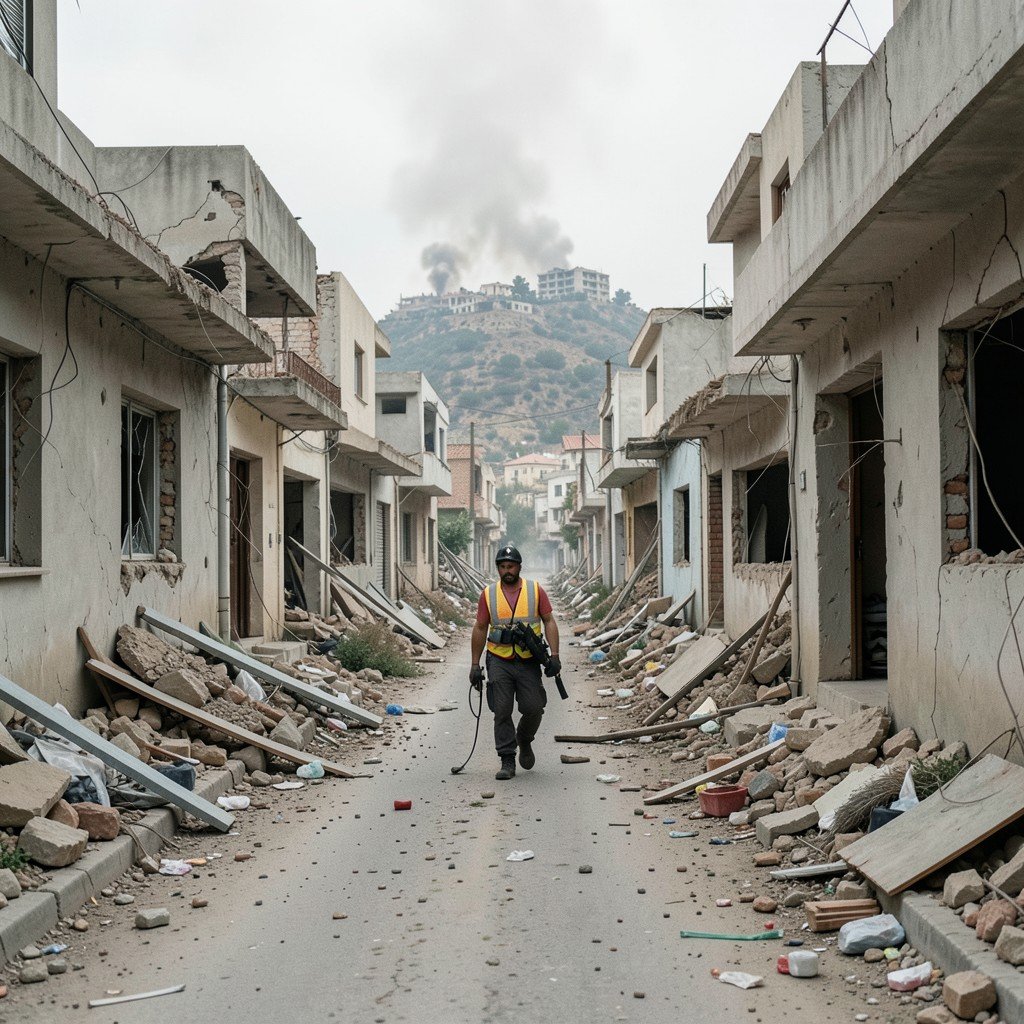
AI-generated representative image: War-damaged residential street in southern Lebanon amid ongoing Israeli strikes.
Editorial Team
Editorial Team
Artillery shelling, ground raids and airstrikes persist across both borders as ceasefire talks stall

Israeli forces carried out artillery attacks and ground raids in southern Syria while conducting air strikes and demolitions across southern Lebanon late on Wednesday, despite ongoing diplomatic efforts to end the fighting. Witnesses reported Israeli shelling of a hilltop near the town of Beit Jinn in the western Damascus countryside, while Syria's Alikhbariah TV said soldiers had also raided and searched a house in the village of Taranja in the Quneitra countryside.

The renewed operations come days after Syrian Foreign Minister Asaad al-Shaibani met Israeli intelligence officials in Jordan for US-mediated talks, and despite a US-brokered framework agreement intended to end hostilities in Lebanon. The continued strikes underscore the widening gap between diplomatic initiatives and the military reality on the ground, with civilians in both countries bearing the heaviest toll.

Latest Military Operations

In Syria, Israeli forces shelled the strategic Bat al-Warda hill near Beit Jinn, an area that has faced repeated Israeli attacks in recent months, including a drone strike on a vehicle on Saturday and a ground raid last year that killed at least 13 people, including children.

In Lebanon, Israeli forces launched air attacks on the town of al-Mansouri in the Tyre district and on Sarbine in the Bint Jbeil district, according to Lebanon's National News Agency. Artillery fire hit Wadi Zibqin, while air strikes struck Beit Lif and Yater. Israeli forces also continued demolishing property across southern Lebanon, including in Hula in the Marjayoun district, with large explosions heard from Bayt al-Sayyad, Baraachit and Majdal Zoun. Israeli drones flew at low altitude over Beirut, including its southern suburbs.

Background of the Conflict

Israel has conducted hundreds of strikes on Syria since the overthrow of longtime ruler Bashar al-Assad in December 2024, and has deployed troops into a United Nations-patrolled buffer zone that had separated Israeli and Syrian forces in the occupied Golan Heights for decades.

Tensions further escalated after Israel's military bombed a Syrian airbase near the Turkish border, claiming Turkiye had been seeking to establish a military presence there. Both Damascus and Ankara deny the allegations.

In Lebanon, the current violence follows an escalation in March, when Israel bombarded the country in response to renewed attacks by Hezbollah. The armed group said its actions were a response to the killing of Iran's supreme leader, Ali Khamenei, on the first day of the US-Israel war on Iran, as well as near-daily Israeli violations of an earlier ceasefire.

Casualty Figures and Official Positions

Lebanon's Ministry of Health reports that the Israeli campaign has killed 4,350 people and wounded 12,310 since March 2. The continued strikes have renewed debate in Beirut over the framework agreement Lebanon signed with Israel in June, which envisages a phased Israeli withdrawal in exchange for the deployment of the Lebanese army and the disarmament of armed groups, a reference to Hezbollah.

President Joseph Aoun defended the negotiating track on Wednesday, saying it remained the option that would spare Lebanon "the horrors of war," despite what he called delays and obstacles. Political analyst Khaldoun Al-Sharif said Lebanon had met its commitments under the first ceasefire agreement reached with Israel in 2024, but that Israel has continued strikes and demolitions without consequences from the US. "More than 10,000 violations, and they haven't lifted a finger," he said.

Outlook for Diplomacy

Analyst Marwan Kabalan of the Arab Center for Research and Policy Studies said he did not expect the Syria-Israel talks to yield a breakthrough, suggesting Israeli Prime Minister Benjamin Netanyahu was "trying to escalate in more than one place" ahead of the country's general election in October, seeking to translate the escalation into votes among right-wing and far-right circles. With military operations continuing on both fronts, the prospect of a near-term diplomatic resolution remains uncertain.

MORE LIKE THIS

Comments (0)

Leave a comment

A verified Gmail account is required to post comments.

No comments yet. Be the first to share your thoughts!