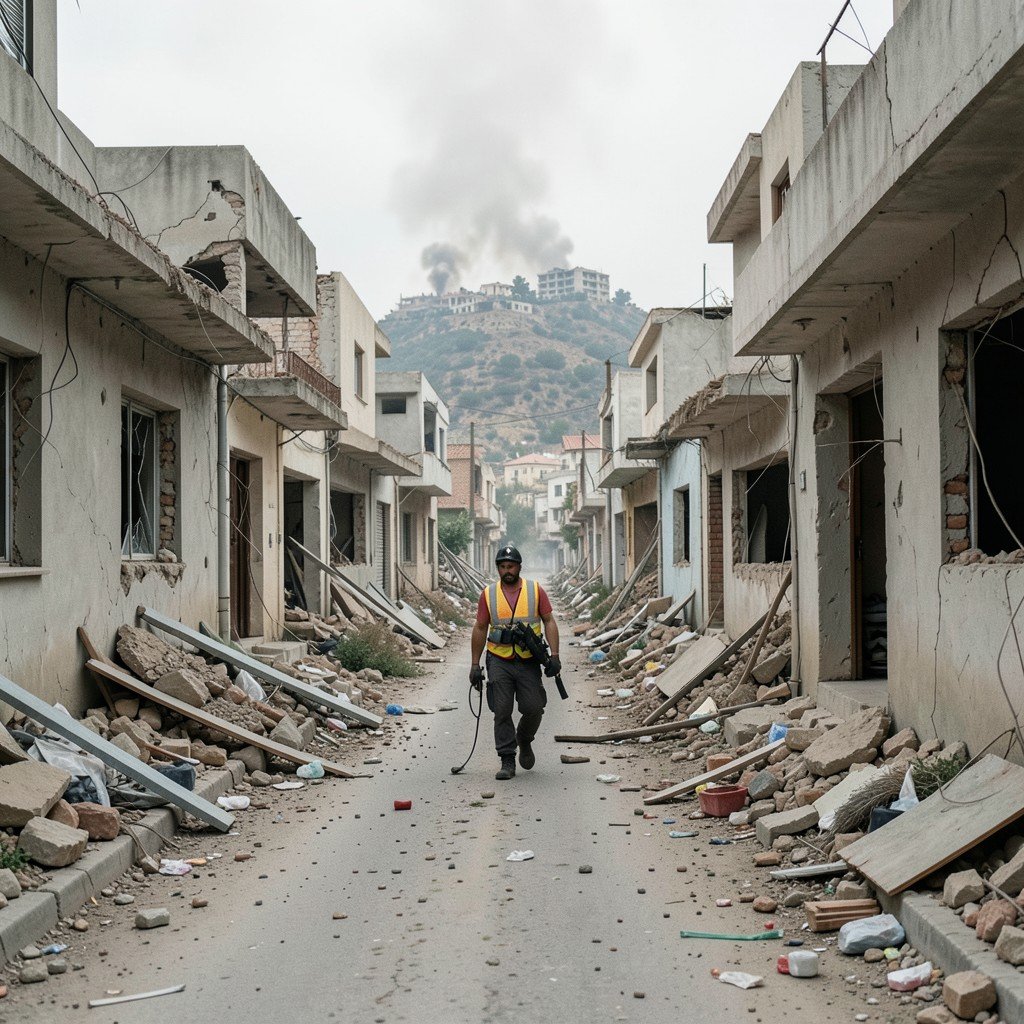

Glacier Collapse Triggers Deadly Nepal-Tibet Border Floods
news

Glacier Collapse Triggers Deadly Nepal-Tibet Border Floods

By Editorial TeamAug 27, 2026 · 6:20 AM4 min read
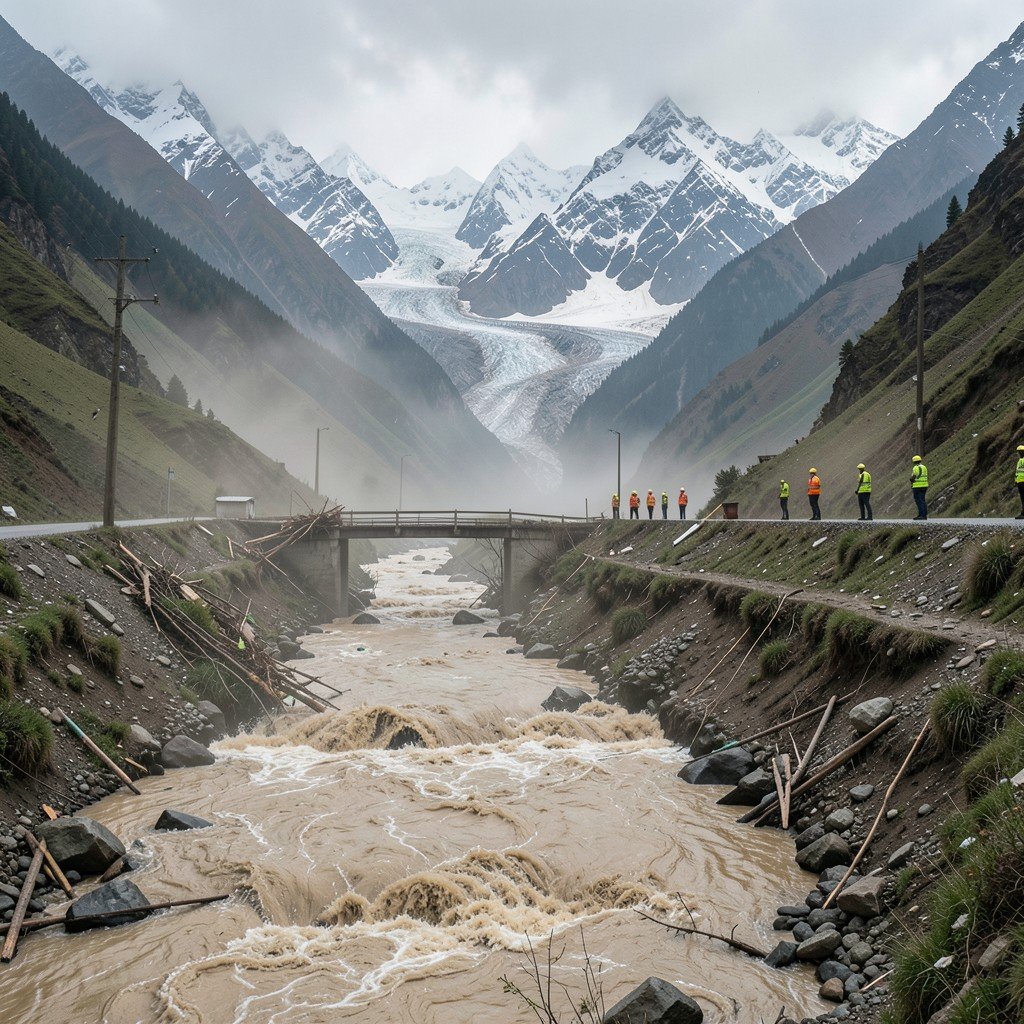
AI-generated representative image: A muddy flash flood surges through a Himalayan valley near the Nepal-Tibet border, where a glacier collapse triggered deadly
Editorial Team
Editorial Team
Himalayan glacier collapse leaves 160 dead and nearly 1,500 missing as floods and landslides devastate mountain valleys

A section of glacier collapsed high in the Himalayas on Wednesday, triggering flash floods and mudslides that killed at least 160 people and left nearly 1,500 missing across the Nepal-Tibet border region.

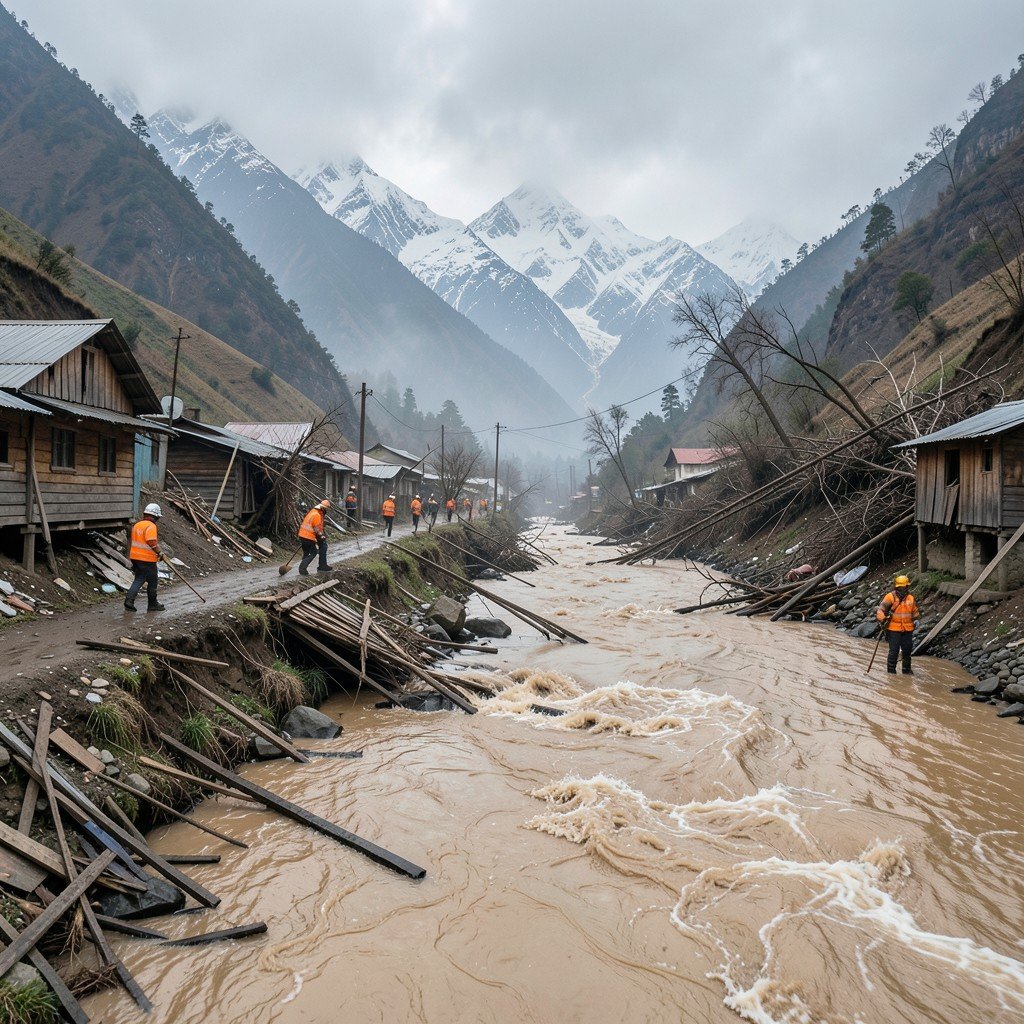
The disaster struck at about 8:40am local time (02:55 GMT), when a massive surge of water, mud and rocks swept through the Lhende Khola river valley, destroying homes, roads and bridges across Nepal's Rasuwa district and Tibet's Gyirong County.

The flood has become one of the deadliest Himalayan disasters in recent years, with hundreds of foreign tourists and pilgrims among the missing. The scale of destruction has prompted a multinational relief effort as authorities race to reach communities cut off by damaged roads, high water levels and thick mud.

The disaster also highlights the growing instability of Himalayan glaciers amid rapid regional warming, even as scientists caution that a direct climate link to this specific collapse has not yet been established.

Scale of the Disaster

Police in Nepal have recovered at least 157 bodies, while authorities in Tibet have reported three deaths in Gyirong County. In Nepal, 826 people are missing, including almost 600 foreign tourists from more than two dozen countries. Across the border, Chinese state media reported 558 people missing, including 260 foreign nationals.

At least 19 bridges and about 40km (25 miles) of roads were washed away. Among the missing foreign nationals in Nepal are:

  • India: 177
  • United States: 63
  • Australia: 34
  • United Kingdom: 33
  • Canada: 25

Many of those caught up in the disaster were pilgrims travelling towards Kailash Mansarovar in Tibet. At least 65 people were being treated for injuries in local hospitals and in Kathmandu.

What Triggered the Floods

Officials were caught off-guard because it was not raining at the time of the disaster. Satellite imagery showed that a substantial section of the lower end of the glacier broke away at an elevation of about 5,200 metres (17,000 feet), plunging roughly 1,200 metres (3,900ft) onto the valley floor and gathering rock and sediment as it fell.

The resulting ice-rock avalanche struck the Lhende River in Tibet, about 20km (12 miles) northeast of the Nepal-China border crossing. Debris temporarily blocked the river before the natural dam gave way, releasing a powerful flood downstream. The landslide eventually registered as a magnitude 5.2 seismic event.

Early reports had suggested a magnitude 4.4 earthquake triggered the collapse, but the United States Geological Survey later revised its assessment, saying the seismic signal was generated by the landslide itself rather than an earthquake.

International Response and Climate Context

India has sent a rescue aircraft carrying about 10 tonnes of emergency supplies, including temporary shelters, blankets, hygiene kits, solar lamps and medicines. The International Federation of Red Cross and Red Crescent Societies released 1 million Swiss francs ($1.2m) in emergency funding, while the United States said it was providing $500,000 in assistance and sending a disaster response adviser.

The European Union activated its Copernicus Emergency Management Service to map disaster zones using satellite imagery. South Korea established a government task force after several of its nationals working at a hydropower project were reported missing, and President Xi Jinping ordered an "all-out" search-and-rescue operation in Tibet.

Scientists are still investigating the collapse's cause. Glaciers across the Hindu Kush Himalaya range lost ice 65 percent faster between 2011 and 2020 than during the previous decade, and Nepal's glaciers have lost close to one-third of their ice volume in roughly three decades. Satellite observations showed unusually warm conditions around the affected glacier before the collapse, but no direct link to climate change has been established.

What Lies Ahead

More than 5,000 Nepalese army and police personnel are searching for survivors and recovering bodies, with helicopters delivering tents, food and other emergency supplies to isolated communities. Officials have warned the death toll is likely to rise as rescuers reach areas that remain inaccessible due to damaged roads and thick mud.

In Tibet, Chinese authorities are monitoring a still-dammed lake upstream from the disaster zone in Gyirong that could complicate rescue efforts and pose a further flood risk.

MORE LIKE THIS

Comments (0)

Leave a comment

A verified Gmail account is required to post comments.

No comments yet. Be the first to share your thoughts!