Deconfliction Mechanism Proposed After Israeli Strike on Syrian Airbase
news

Deconfliction Mechanism Proposed After Israeli Strike on Syrian Airbase

By Editorial TeamAug 19, 2026 · 7:30 PM4 min read
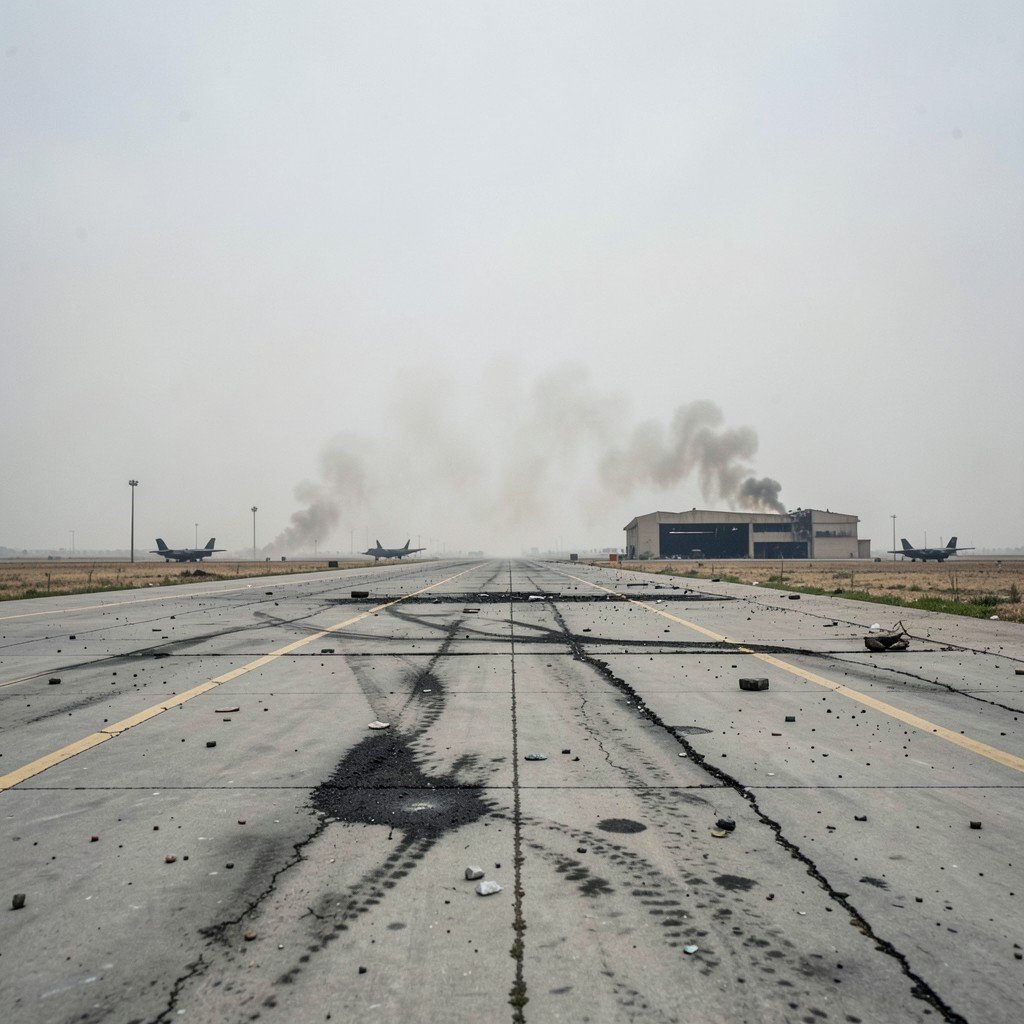
AI-generated representative image. A damaged military airbase in northwest Syria, illustrating reports of a suspected Israeli strike.
Editorial Team
Editorial Team
US envoy Tom Barrack pushes Turkiye-Syria-Israel deconfliction plan as analysts question whether Washington will pressure Netanyahu

A day after a suspected Israeli attack on the Abu al-Duhur airbase near Idlib in northwest Syria, US Ambassador to Turkiye Tom Barrack has proposed creating a "deconfliction mechanism" between Turkiye, Syria and Israel. Barrack described the original attack, which he and the Syrian government blamed on Israel, as an "unnecessary escalation."

Analysts and diplomatic sources, however, say the proposal may struggle to halt Israeli military action against Syria, which has continued for years and includes the occupation of Syrian territory.

The proposal arrives as Syria, under a new government following the overthrow of former President Bashar al-Assad in December 2024, seeks improved relations with the West after more than a decade of war. Regional tensions have also sharpened as Israel shifts its focus from Iranian influence in Syria to what it perceives as growing Turkish influence.

Whether the mechanism can work depends less on its design and more on whether the United States is prepared to pressure Israel, analysts say, given that Israel is widely seen as the party holding back progress on talks.

Key Developments

  • US Ambassador Tom Barrack proposed a US-facilitated deconfliction channel between Syria, Turkiye and Israel following the suspected strike on the Abu al-Duhur airbase.
  • The Israeli Prime Minister's Office issued a statement stopping short of claiming responsibility for the attack, saying Syria was "on the verge of breaching" a security status quo by permitting Turkish troops to deploy at an airbase near Aleppo.
  • Turkiye rejected the Israeli account, accusing Prime Minister Benjamin Netanyahu of pursuing "expansionist and destabilising policies in the region ahead of the elections in Israel."
  • Early Wednesday morning, Israeli troops reportedly raided Quneitra in southwestern Syria and abducted two people.

Background and Shifting Focus

Under the former al-Assad regime, Israel frequently attacked Iranian-aligned targets in Syria, including the Iranian consulate in Damascus in April 2024, but largely avoided striking Syrian state targets directly. That pattern changed when al-Assad fled in the early hours of December 8, 2024, after which Israel attacked Syria's military infrastructure nationwide in an effort to cripple the new government's forces.

Since al-Assad's fall, Israel has redirected its attention from Iranian influence to Turkish influence in Syria. Turkiye backed several anti-Assad rebel groups, hosted many Syrian exiles, and has sought strong ties with Damascus and Syria's new President Ahmed al-Sharaa. Analysts said Tuesday's attack was effectively a message from Tel Aviv directed at Ankara.

The proposed mechanism mirrors a similar US effort in Lebanon aimed at stopping Israeli attacks, disarming Hezbollah, and securing an Israeli withdrawal from southern Lebanon. Experts note that process has yet to show results, largely because of Israel's military superiority and the Netanyahu government's willingness to undermine negotiations through unilateral action.


Analyst Assessments and Official Statements

Samy Akil, a senior adviser with The Syria Report, questioned the mechanism's value when only one party is causing conflict. "It is difficult to have a deconfliction mechanism [when] only one party [is] causing conflict in the first place," he said, adding that Syria's small Soviet-era air force would not "seriously pose a threat to Israel."

Galip Dalay, a senior research fellow at Chatham House, said the mechanism would only work if the US applies pressure on Netanyahu's government, which faces elections in October. He noted that Netanyahu previously rejected a Gaza disarmament plan announced by US President Donald Trump in August without public pushback from Washington.

"If the US puts proper pressure on Israel, they would listen," Dalay said. "The question is not only about if there is a need for a deconfliction mechanism in Syria; it is to what extent the US is willing to make it credible and functional."

What Lies Ahead

Syria has shown a willingness to pursue a solution with Israel while emphasising it will not agree to full normalisation. This comes despite Israel's seizure of Syrian territory in the Golan Heights and Jabal al-Sheikh in December 2024 and the continued operation of checkpoints that analysts say harass and at times abduct Syrian citizens.

For now, the deconfliction proposal remains a suggestion, and its viability depends on whether Washington is willing to make it credible and functional. No formal agreement has been announced, and further developments are awaited.

MORE LIKE THIS

Comments (0)

Leave a comment

A verified Gmail account is required to post comments.

No comments yet. Be the first to share your thoughts!