
US Lost 81 Aircraft in Iran War, Congressional Report Finds
news

US Lost 81 Aircraft in Iran War, Congressional Report Finds

By Editorial Team•Oct 7, 2026 · 6:46 PM•4 min read
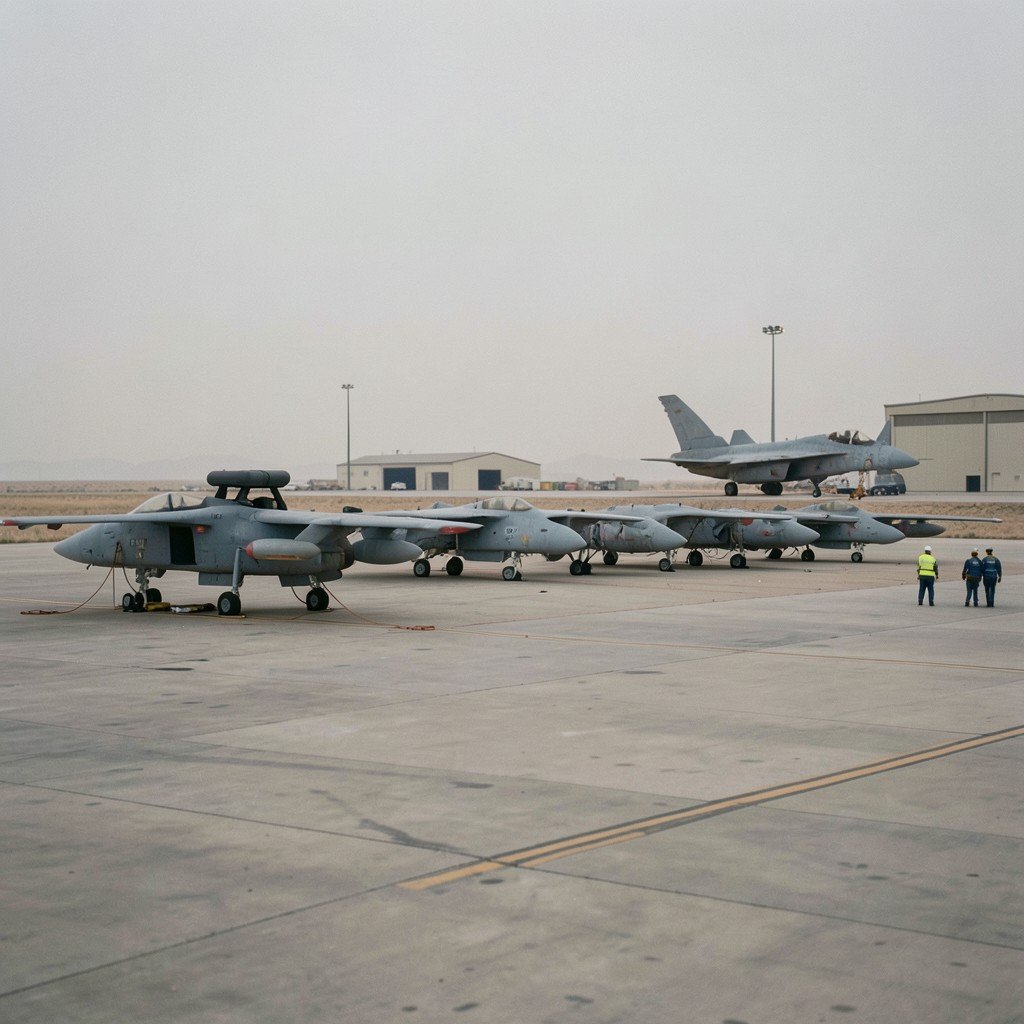
AI-generated representative image: US military aircraft, including MQ-9 Reaper drones and a damaged fighter jet, on an airbase flight line.
Editorial Team
Editorial Team
Congressional Research Service estimates US aircraft losses in Iran conflict could cost up to $3.3 billion

The United States has lost at least 81 military aircraft since Washington and Israel launched their war against Iran in late February, according to a report prepared for US lawmakers and released by the Congressional Research Service (CRS) on Tuesday.

The destroyed or damaged American warplanes, helicopters and drones could carry a combined cost of $3.3 billion, the paper concludes, drawing on news reports and statements from the US Central Command and War Department officials.

The findings give the public and Congress the clearest picture yet of the toll the conflict has taken on US airpower, an issue the Pentagon had been criticized for not disclosing fully. Lawmakers previously pressed the Defense Department for a complete accounting of aircraft losses without success.

The report raises questions about the military's ability to replace aging platforms already in short supply and about the long-term financial burden of a war now entering its eighth month.

Breakdown of Aircraft Losses

Some of the most advanced US warplanes have been affected, including one F-35A Lightning II stealth fighter damaged by Iranian fire on March 19 and 12 F-15E Strike Eagle fighters. Three F-15s were shot down by friendly fire in Kuwait's airspace in early March, while another was hit over Iran the following month. Eight additional F-15s sustained minor damage during an Iranian missile attack on an airbase in Jordan in September but have since been repaired and returned to service.

Seven KC-135 Stratotanker aerial refueling aircraft were also destroyed or damaged. Two were involved in a March 14 incident in which one KC-135 crashed in Iraq, killing all six crew members, while another performed an emergency landing. Six more refueling planes were affected days later during an Iranian bombardment of a US base in Saudi Arabia.

Other losses included two A-10 Thunderbolt IIs, two MC-130J special operations aircraft and an E-3 Sentry airborne warning-and-control aircraft. The heaviest attrition was felt by the MQ-9 Reaper drone fleet, with at least 45 lost during the conflict.

Conflict Timeline and Prior Criticism

The war between the United States, Israel and Iran began in late February. Since then, US aircraft have been lost across multiple theaters, including Kuwait, Iraq, Jordan, Saudi Arabia, the Strait of Hormuz and the Arabian Sea. Among the helicopters reported destroyed were one AH-64 Apache shot down over the Strait of Hormuz, four AH-6 Little Birds lost during rescue operations and an MH-60 Sea Hawk that crashed over the Arabian Sea in mid-September.

Congress had previously criticized the Pentagon for its reluctance to provide a complete list of aircraft losses, prompting the CRS to compile its figures from news reports and official statements. The report highlights that several issues could benefit from congressional oversight, including whether the Pentagon has sufficient funding to replace damaged aircraft and whether losses of aging platforms could create capability gaps for the US military.

Financial Cost and Iranian Response

Last month, the Congressional Budget Office estimated that the conflict with Iran had cost the United States approximately $38 billion in its first five months, with the bill potentially rising by another $2 billion to $3 billion for each additional month of fighting.

Iran, meanwhile, has increased its arms production capacity by 2.5 times compared to its pre-war level, according to Brigadier General Reza Talaei-Nik, a Defense Ministry spokesman. Speaking on Tuesday, he warned that any further US aggression would be met with a decisive response by Tehran, adding that the Islamic Republic now manufactures more than 1,000 types of weapons systems and munitions, many of which have undergone technological upgrades during the conflict.

What Comes Next

The CRS report identifies funding and platform replacement as key areas requiring congressional oversight, signaling that lawmakers may soon scrutinize the Pentagon's war budget and its ability to sustain air operations. No official confirmation of additional aircraft losses has been released, and further details on pending replacement plans remain awaited.

MORE LIKE THIS

Comments (0)

Leave a comment

A verified Gmail account is required to post comments.

No comments yet. Be the first to share your thoughts!