
Mecca Joint Defence Agreement: Saudi Arabia, Turkiye and Pakistan Forge Military Alliance
news

Mecca Joint Defence Agreement: Saudi Arabia, Turkiye and Pakistan Forge Military Alliance

By Editorial TeamAug 12, 2026 · 12:48 AM4 min read
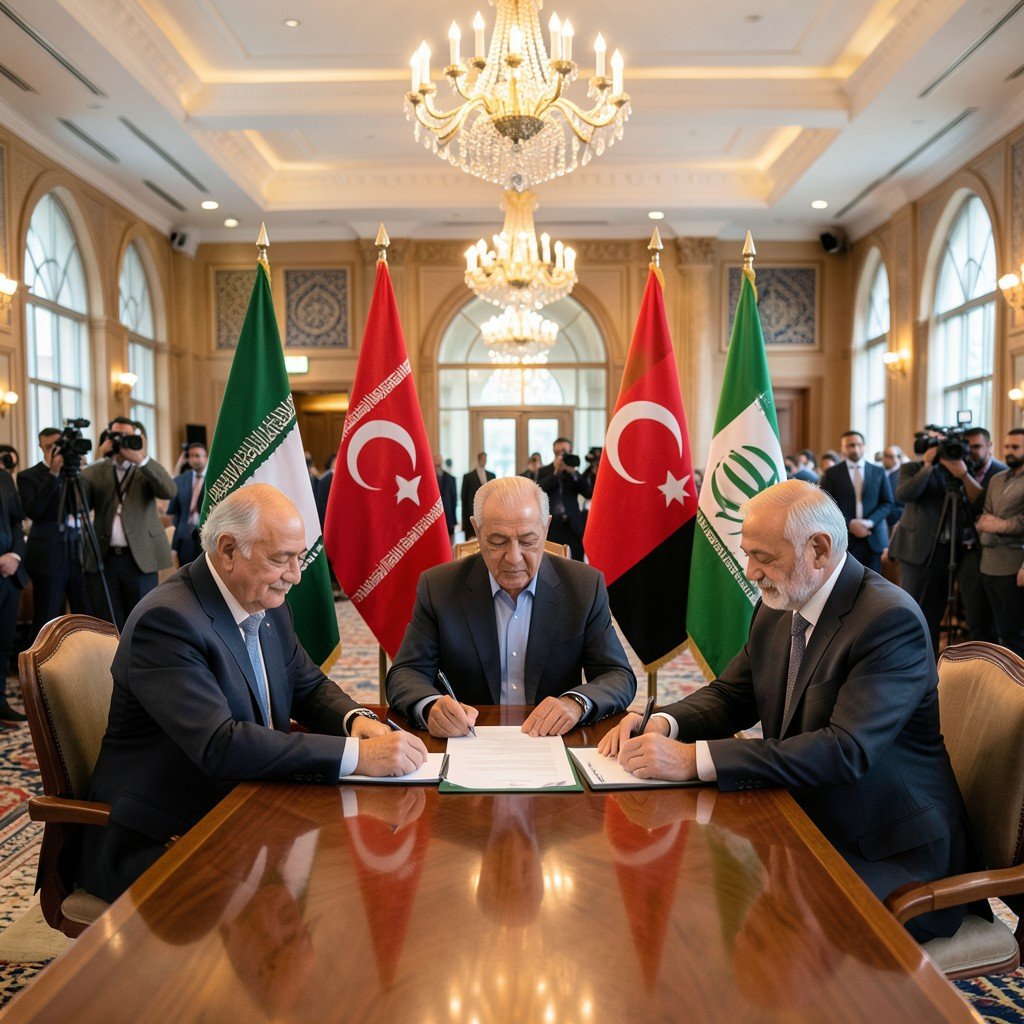
AI-generated representative image. Senior officials at a diplomatic signing ceremony symbolising the trilateral defence pact between Saudi Arabia, Turkiye and P
Editorial Team
Editorial Team
The trilateral pact binds the three nations to collective deterrence, treating an attack on one as an attack on all, amid shifting regional security dynamics

Leaders of Saudi Arabia, Turkiye and Pakistan signed the Mecca Joint Defence Agreement last Friday, a landmark pact that commits the three nations to collective deterrence and declares that an armed attack on any one of them will be regarded as an attack on all.

The agreement brings together Riyadh's financial strength, Ankara's advanced defence industry and NATO expertise, and Islamabad's nuclear capability and large professional military, creating a formidable combined force of nearly 1.4 million active personnel, 3,400 aircraft, 6,000 tanks and more than 340 naval assets.

The pact represents a significant shift in regional security architecture, moving away from the traditional US-centred hub-and-spokes model toward direct horizontal cooperation between major Muslim-majority powers. It comes as the three countries navigate growing regional tensions, including concerns over Israel's expanding military reach and Iran's regional influence, while also reflecting a desire among regional actors to convert their own resources into usable power rather than relying primarily on Washington.

Combined Military Strength at a Glance

According to the 2026 Global Firepower Index, which ranks the defence capabilities of 145 countries, the three nations together command substantial military resources:

  • Manpower: Approximately 1.4 million active personnel, with Pakistan contributing 660,000, Turkiye 481,000 and Saudi Arabia 247,000, backed by large paramilitary and reserve forces.
  • Air power: A combined 3,415 military aircraft including fighter jets, helicopters, transporters and trainers, with Pakistan operating 1,397, Turkiye 1,101 and Saudi Arabia 917.
  • Land forces: Some 6,046 tanks and more than 179,000 armoured vehicles, alongside thousands of artillery systems and multiple-launch rocket systems. Pakistan leads with 2,677 tanks, followed by Turkiye with 2,284 and Saudi Arabia with 1,085.
  • Naval power: 344 naval assets including 33 frigates, 24 corvettes and 22 submarines, with Turkiye holding 192 assets, Pakistan 120 and Saudi Arabia 32.
  • Defence spending: Combined annual budgets of about $124.4 billion, with Saudi Arabia allocating $63.9 billion, Turkiye $51.4 billion and Pakistan $9.1 billion.

Strategic Motivations Behind the Alliance

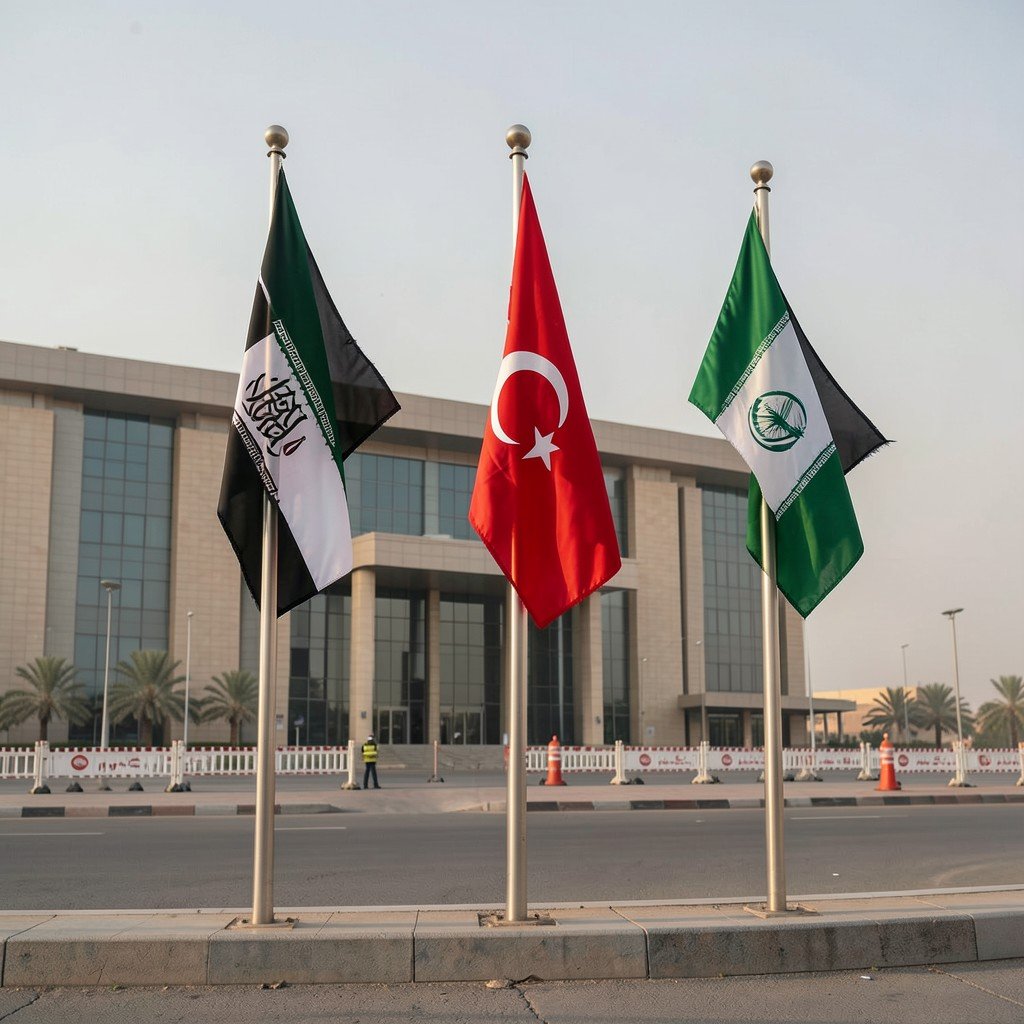
For Saudi Arabia, the pact diversifies its defence partnerships beyond the United States, adding Turkiye's advanced military capabilities and Pakistan's nuclear deterrent amid growing threats to vital maritime corridors such as the Strait of Hormuz and Bab al-Mandeb. Pakistan, which first tested nuclear weapons in 1998 and is one of nine nuclear-armed states globally, relies heavily on China for arms imports. Turkiye, a NATO member since 1952, possesses no nuclear weapons of its own but hosts US warheads under NATO nuclear-sharing arrangements.

David Des Roches, a former director of Arabian Peninsula affairs in the US Department of Defense, noted that the deal also serves Saudi arms diversification amid Western export unpredictability, since Turkiye and Pakistan can supply items like 155mm artillery shells at scale. For Turkiye and Pakistan, the agreement opens Saudi financial markets for their defence industries, as both countries have manufacturing capacity exceeding what their own economies can sustain.

Analyst Perspectives on the Pact's Significance

Andreas Krieg, a security analyst and political risk consultant specialising in the Middle East and North Africa, emphasized that the pact's value lies in how the three countries' different capabilities complement one another. "Saudi Arabia contributes capital, geography, infrastructure and political convening power. Turkiye contributes an increasingly sophisticated defence-industrial base, drones, missiles, sensors, electronic warfare, naval systems and NATO-derived military expertise," Krieg said. Pakistan, he added, brings manpower, operational experience, defence production and nuclear capability.

On the implications for Washington, Zaid M Belbagi, managing partner at Hardcastle Advisory, observed: "Pakistan is a recipient of US aid, Saudi Arabia is the largest foreign buyer of US military equipment, and Turkiye is NATO's second-largest army after the United States, so the spectre of the US within this agreement is quite interesting." Krieg added that the US remains highly important for intelligence, advanced missile defence and high-end military technology, but stressed that regional actors increasingly seek to convert their own resources into usable power.

Potential Expansion of the Alliance

Egypt is the only country whose potential membership has been publicly raised by a signatory. Turkiye's Foreign Minister Hakan Fidan described Egypt as a "natural partner" and expressed expectation that Cairo would join once technical issues are resolved. Egypt's military weight, strategic geography and control of the Suez Canal would make it a significant addition, according to Krieg.

However, analysts caution that Cairo may proceed carefully. Karim Elgendy at Chatham House noted that Egypt may join only if the language protects its aid relationship with Washington, does not undermine existing alliances and peace treaties, and maintains its freedom to decide when and where it fights. No formal timeline for Egyptian accession has been announced.

MORE LIKE THIS

Comments (0)

Leave a comment

A verified Gmail account is required to post comments.

No comments yet. Be the first to share your thoughts!