
Netanyahu Threatens Solo Strike on Iran as US-Tehran Near Interim Deal
news

Netanyahu Threatens Solo Strike on Iran as US-Tehran Near Interim Deal

By Editorial TeamAug 6, 2026 · 6:26 PM4 min read
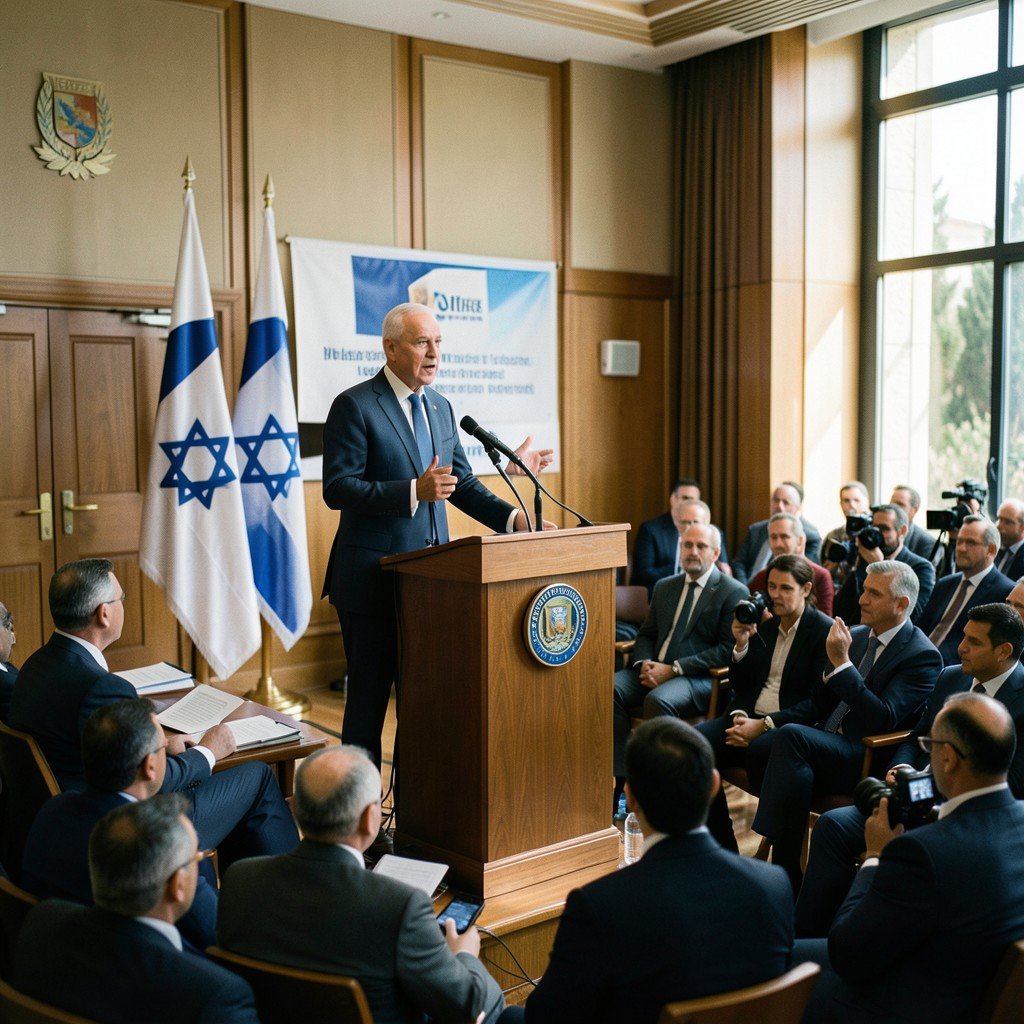
AI-generated representative image: Israeli Prime Minister Benjamin Netanyahu speaking at a state ceremony in West Jerusalem amid rising tensions over Iran's nuc
Editorial Team
Editorial Team
Israeli leader's unilateral military warning escalates Middle East tensions ahead of critical election and growing rift with Washington

Israeli Prime Minister Benjamin Netanyahu has indicated he may consider unilateral military action against Iran, even as the United States and Tehran appear close to an interim agreement to reopen the Strait of Hormuz. Speaking at a state ceremony in West Jerusalem, Netanyahu claimed Iran's Islamic Revolutionary Guard Corps commander Ahmad Vahidi had declared Iran's intention to continue nuclear weapon development, though no official Iranian statement has confirmed such remarks.

Netanyahu's comments come as he faces a crucial election later this year and growing friction with Washington over the trajectory of the joint US-Israeli war on Iran that began in late February.

The prime minister's remarks highlight a deepening rift between Israel and its most important ally at a pivotal moment. With the Strait of Hormuz blockade paralysing global energy markets and the war widely viewed as failing to achieve its objectives, the prospect of Israel acting independently carries significant implications for regional stability, international supply chains, and the future of US-Israeli military cooperation.

Escalating Rhetoric Amid Diplomatic Shifts

Netanyahu described the United States as "Israel's greatest ally" but stressed he was prepared to do "whatever is necessary" to guarantee Israel's security. The prime minister has consistently maintained that Iran is on the brink of achieving nuclear weapons capability and was reportedly a key voice urging President Donald Trump to withdraw from the 2015 nuclear deal in 2018.

Trump has publicly pushed back against Netanyahu's approach. Addressing reports that the Israeli leader planned to present fresh intelligence alleging Iranian uranium stockpiling at the Pickaxe Mountain facility near Natanz, Trump told reporters: "I don't need Bibi to tell me that. Bibi is telling me that because he wants me to stay involved." He added pointedly: "Why don't you just tell it to me? Why do you have to announce it to the world?"

Origins of the Conflict and Economic Fallout

The war began in late February with a joint US-Israeli attack that killed Iranian Supreme Leader Ali Khamenei. Since then, the two allies have been unable to topple the Iranian state or force concessions on the Strait of Hormuz. Israel has officially struck Iran only once since an initial ceasefire in April, even after it broke down and hostilities resumed.

Iran's blockade of the strategic waterway has severely disrupted the global economy. Oil prices have surged, and shortages of liquified gas, fertiliser exports, sulphur supplies, and petrochemical feedstocks threaten to cascade through international supply chains. Ahron Bregman, an Israeli security analyst and senior teaching fellow at King's College London, described the war as "a strategic catastrophe," adding: "None of the original aims has been achieved. Trump is desperate for an exit. Almost at any price. He only cares about opening the strait."

Divergent Views Within Israeli Security Circles

Kobi Michael, a senior researcher at Israel's Misgav Institute for National Security, framed the current US-Iran negotiations as "useless" and unlikely to produce lasting regional security. "Israel can only have one strategy: to strike directly at the head of the octopus that threatens global civilisation and to do that alone, if necessary," Michael said, acknowledging such action could inflame tensions with Washington.

However, former US diplomat Aaron David Miller offered a starkly different assessment, calling unilateral Israeli action "inconceivable" while negotiations are near conclusion. He noted that US-Israeli relations are entering unprecedented territory: military cooperation has never been closer, yet diplomatic ties are increasingly strained. Miller cited Trump's direct negotiations with Hamas over Gaza, the lifting of sanctions on Syria despite Israeli objections, and talks with Iran conducted without Israeli involvement as evidence of a shifting dynamic. "Netanyahu had a hell of a role in how this war started," Miller said. "He's not going to have a role in how it shifts to its next phase."

Election Pressures and Uncertain Path Forward

Analysts suggest Netanyahu's aggressive posture may be partly driven by domestic political calculations. The upcoming election could jeopardise both his legacy and his personal freedom, given his ongoing corruption trial. Relations between the two leaders appear increasingly frosty, with friction extending beyond Iran to include Israeli reluctance to accept Gaza terms imposed by the Trump-sponsored Board of Peace and Israeli strikes in Lebanon that have repeatedly threatened to derail US negotiations with Tehran. The future of US military assistance to Israel, including defence cooperation, intelligence sharing, and diplomatic support in international forums, remains uncertain.

MORE LIKE THIS

Comments (0)

Leave a comment

A verified Gmail account is required to post comments.

No comments yet. Be the first to share your thoughts!