
Anti-Muslim Rhetoric Dominates US Midterm Election Campaigns
news

Anti-Muslim Rhetoric Dominates US Midterm Election Campaigns

By Editorial Team•Nov 3, 2026 · 7:13 PM•3 min read
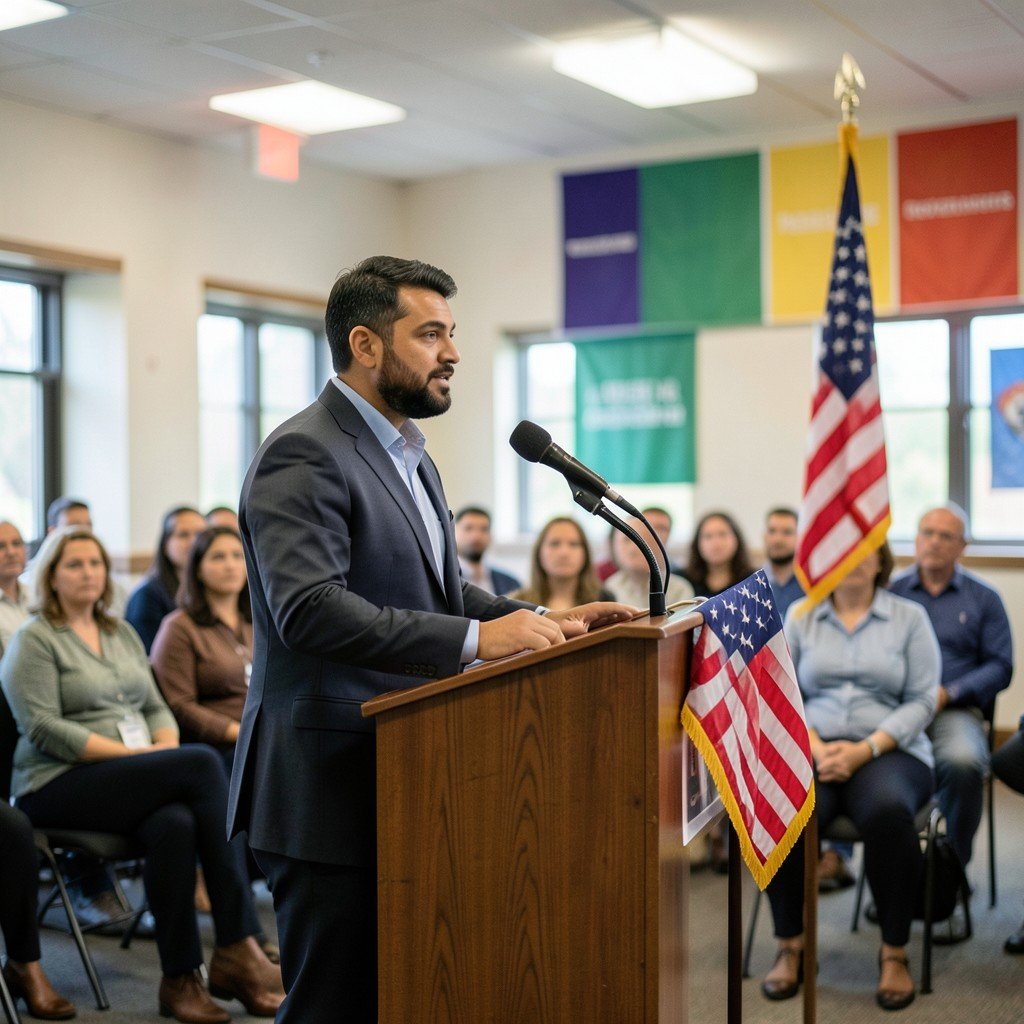
AI-generated representative image: A Muslim American candidate speaks at a campaign event amid a midterm season marked by anti-Muslim rhetoric.
Editorial Team
Editorial Team
Islamophobia surges as Muslim candidates face attacks and slurs in key races nationwide

Anti-Muslim rhetoric has become a prominent feature of the United States midterm elections, with Muslim candidates confronting personal attacks, religious discrimination and inflammatory accusations as voting began Tuesday. Democratic Senate candidate Abdul El-Sayed in Michigan has emerged as a central target, facing repeated mockery and religiously charged insinuations, while Representative Ilhan Omar of Minnesota has also been subjected to sustained criticism tied to her faith and Somali heritage.

The campaign discourse reflects a broader shift in American politics, where hostility toward Muslim Americans has moved beyond individual candidates and into electoral platforms even in races where no Muslim is running. The pattern has raised concerns among advocacy groups and observers about the normalization of religious prejudice as a campaign strategy amid deepening political polarization.

Targeting of Muslim Candidates

Former President Donald Trump has repeatedly mocked El-Sayed's name and stated that he hopes the candidate, if elected, will be subjected to metal detector checks before entering the Senate. The attacks have extended beyond Trump, with Vice President JD Vance and El-Sayed's Republican opponent, Mike Rogers, also accusing him of being a member of the Muslim Brotherhood.

Ilhan Omar, the Muslim representative from Minnesota seeking re-election, has regularly faced accusations portraying her as anti-American and anti-Semitic, alongside attacks targeting her Somali background.

Broader Political Climate

The use of anti-Muslim rhetoric has expanded into campaigns where no Muslim candidates are running. In Texas, Republican politicians have campaigned on a pledge to fully ban Sharia Law in the state, turning hostility toward Muslims and their religious identity into an electoral issue.

Beyond elected officials, far-right provocateurs have appeared at Democratic campaign events shouting anti-Muslim slogans, contributing to what observers describe as an increasingly hostile political environment for Muslim Americans. This development comes amid wider criticism of the country's political establishment, with campaigns increasingly relying on religious prejudice and identity-based divisions.

Voting Underway Nationwide

Polling stations opened at 6am local time (11:00 GMT) in New York, Connecticut, New Jersey, Virginia and parts of Indiana and Kentucky. Voting was scheduled to begin at different times elsewhere in the country as Americans cast ballots in the midterm elections.

The election results will determine control of Congress and state offices, with the treatment of Muslim candidates and communities emerging as one of the defining themes of the campaign season.

What Happens Next

As voting continues across the country, attention now turns to the outcome of closely watched races, including the Senate contest in Michigan and Omar's re-election bid in Minnesota. The extent to which anti-Muslim campaign messaging influences voter behavior remains to be seen, with full results expected in the coming days.

MORE LIKE THIS

Comments (0)

Leave a comment

A verified Gmail account is required to post comments.

No comments yet. Be the first to share your thoughts!