
US Prepares New Iran Strikes as Vance Pursues Direct Talks
news

US Prepares New Iran Strikes as Vance Pursues Direct Talks

By Editorial Team•Oct 30, 2026 · 1:05 PM•4 min read
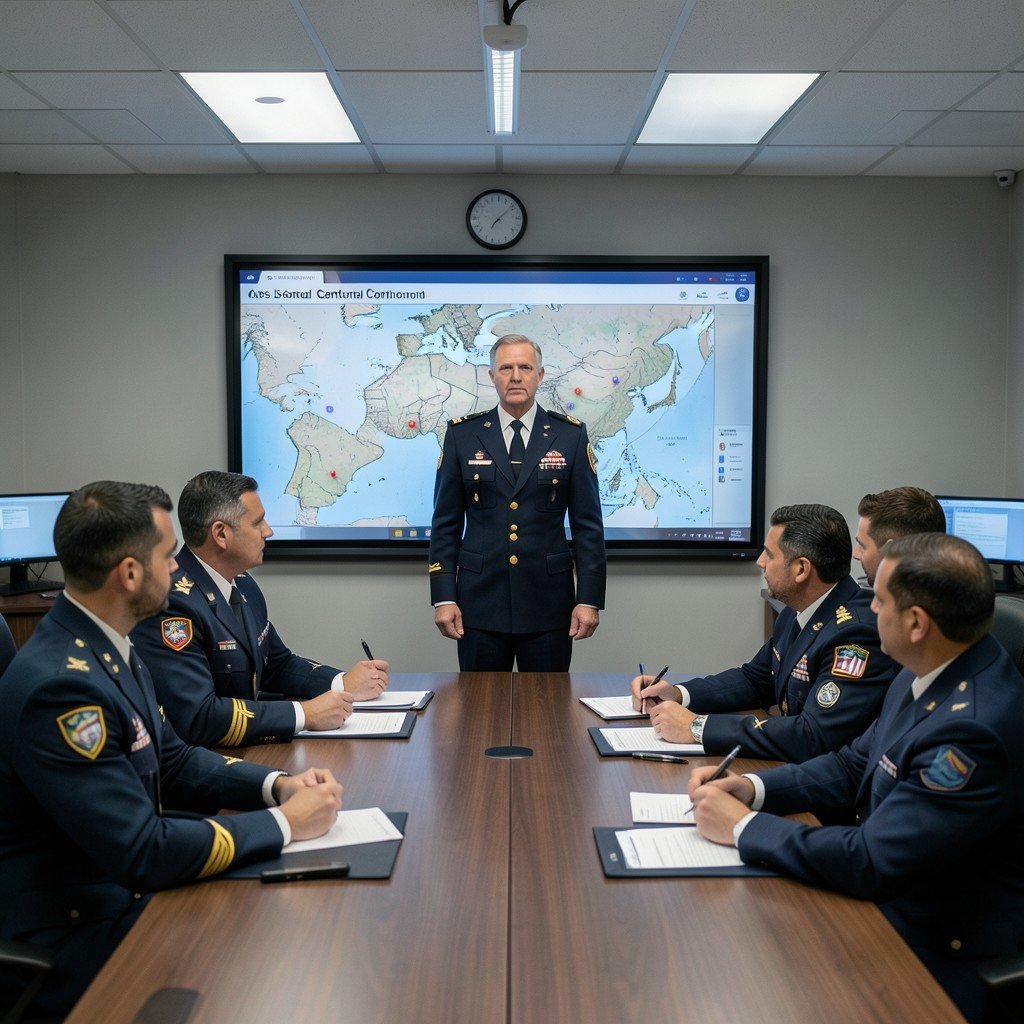
AI-generated representative image: A US military official briefs a command meeting as Washington weighs renewed strikes on Iran.
Editorial Team
Editorial Team
Trump weighs fresh military options with CENTCOM while a diplomatic channel opens through Vice President Vance

The United States is weighing renewed strikes on Iran even as Vice President JD Vance has offered to meet a top Iranian security official directly, leaving the eight-month war between Washington and Tehran balanced between escalation and negotiation.

On Thursday, Admiral Brad Cooper, head of US Central Command, briefed President Donald Trump on options for fresh attacks, while Qatari mediators returned to Tehran on Friday for talks coordinated with Washington.

The conflicting signals carry major stakes for the Middle East. Analysts warn that any new escalation could be worse than the attacks of February and March, with Iran better prepared to strike critical infrastructure in Gulf countries. The outcome also hinges on the November 3 US midterm elections, which are shaping the timing of any military decision.

Military Planning and Diplomatic Outreach

The United States and Israel have drawn up joint plans to attack Iran after the November 3 midterm elections. Washington has boosted air defences and munitions in the region and moved some troops away from bases vulnerable to Iranian retaliation.

Ten US military cargo planes landed at the Ovda and Nevatim air bases in Israel's Negev region on Thursday, with additional aircraft sent to Jordan, Saudi Arabia and Qatar, according to Israeli public broadcaster Kan.

Vance's letter, delivered to Mohsen Rezaei, secretary of Iran's Supreme National Security Council, through Qatari mediators on Sunday, proposed direct talks led by Vance with Iran's nuclear programme on the table from the start. Democratic Senator Chris Murphy, who said he had been briefed on the plans, called them "insane" and warned of a devastating escalation.
A Pattern of Strikes During Talks

Iran was attacked by Israel or the US while negotiations were under way in both 2025 and 2026. On June 13, 2025, Israel launched major strikes on Iranian nuclear and military sites, two days before a sixth round of US-Iran talks was due in Oman. The US joined on June 22, bombing Iran's Natanz, Fordow and Isfahan nuclear sites.

This year, the US and Israel attacked on February 28, two days after talks in Geneva that mediator Oman said had made "significant progress". A day before those strikes, Oman's foreign minister said Iran had agreed to reduce its nuclear stockpiles to "the lowest level possible".

In February, Iran's then supreme leader, Ayatollah Ali Khamenei, was killed in the initial attacks by Israel and the United States, and his son became the new supreme leader. Iranian President Masoud Pezeshkian said in September that Iran no longer trusts negotiations with Washington because attacks had come during previous rounds of talks.

Analyst Assessments and Official Positions

Andreas Krieg, an associate professor of security studies at King's College London, said Vance's offer of direct talks "suggests that the Americans do have second thoughts". But he warned that Cooper, whom he called "quite hawkish", could give Trump false confidence "that there is a military way out of it, when in reality there isn't a military way out of it".

Paul Musgrave, an associate professor of government at Georgetown University in Qatar, said "the better interpretation is the simplest one", believing the United States is getting ready to carry out substantial attacks relatively soon.

Parliament Speaker Mohammad Bagher Ghalibaf said progress depends on Iran's seven conditions being met, including the lifting of sanctions, ending the US naval blockade of Iranian ports, guarantees to an end to US-Israeli strikes, and the unfreezing of Iranian assets. Wolfgang Pusztai, a security and defence analyst and Austria's former defence attache to Libya, said "there is no doubt that the IRGC currently calls the shots in Iran" and that without its approval there will be no agreement.

Current Status and What Comes Next

Analysts expect no major military action before the November 3 midterm elections, with Trump's focus on the vote. Pusztai said it is "very unlikely" Trump will order another large-scale attack on Iran before the elections, but that a major wave of attacks could begin in mid to late November aimed at weakening the IRGC.

Krieg said the likelihood of war will "increase exponentially" after the elections, describing the threat to the Gulf as "unprecedented". Tehran has not yet publicly confirmed whether it will accept Vance's offer of direct talks.

MORE LIKE THIS

Comments (0)

Leave a comment

A verified Gmail account is required to post comments.

No comments yet. Be the first to share your thoughts!