Russia Pursues Iran-Gulf De-escalation in Lavrov Manama Tehran Visit
news

Russia Pursues Iran-Gulf De-escalation in Lavrov Manama Tehran Visit

By Editorial Team•Oct 22, 2026 · 7:20 PM•4 min read
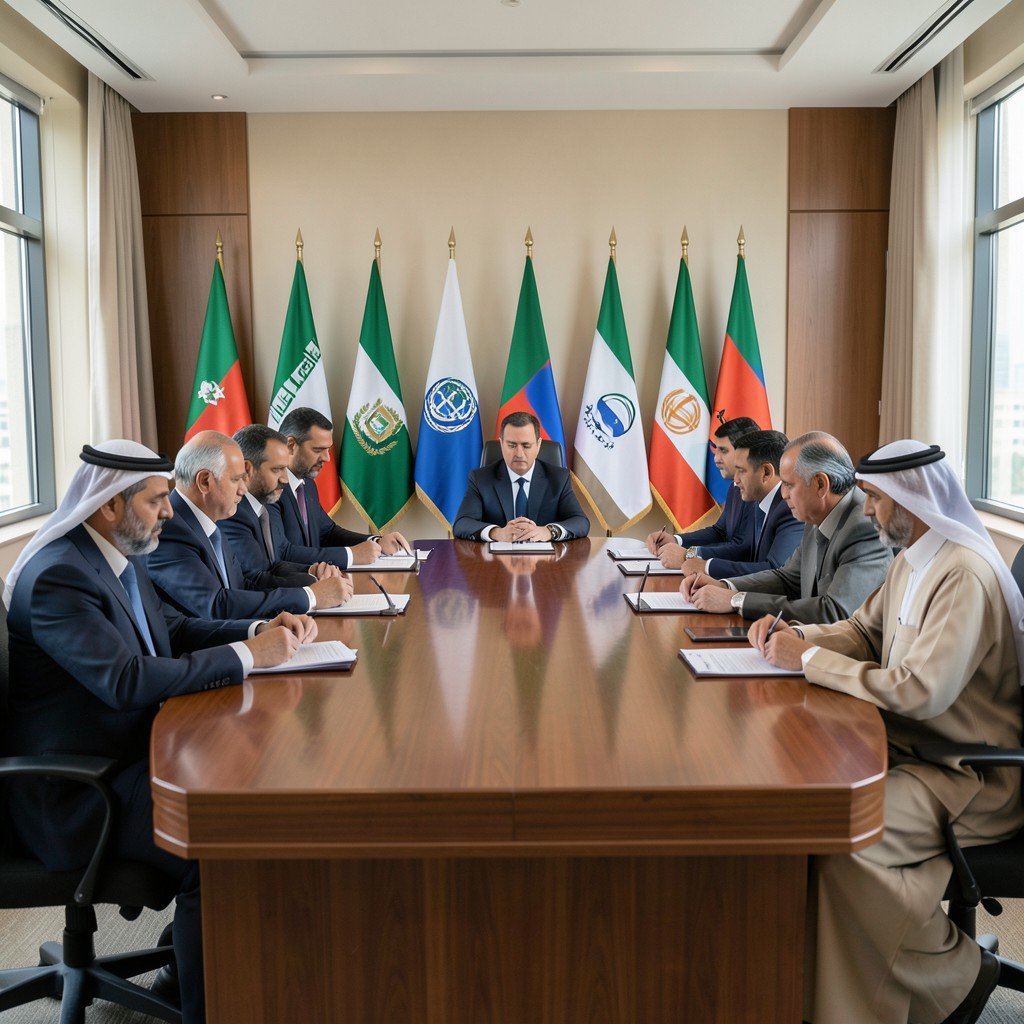
AI-generated representative image: Diplomats gather at a ministerial meeting in Manama during Russia's Gulf Cooperation Council strategic dialogue on Persian Gu
Editorial Team
Editorial Team
Moscow presents a collective Gulf security framework while mediating between Tehran and Arab monarchies amid rising regional tensions.

Russian Foreign Minister Sergey Lavrov visited Bahrain and Iran on October 18 and 19 to advance de-escalation between Tehran and the Arab Gulf states, presenting Moscow's updated concept for collective security in the Persian Gulf. In Manama, he attended the ninth ministerial meeting of the Russia-Gulf Cooperation Council strategic dialogue and held separate talks with the foreign ministers of Saudi Arabia and Kuwait. The following day in Tehran, he met Foreign Minister Abbas Araghchi and President Masoud Pezeshkian.

The mission reflects Moscow's effort to prevent a new divide between Iran and the Arab monarchies from becoming entrenched as the consequences of the US-Israeli military operation against Iran ripple across the region. Russia's ability to speak with both sides gives it a rare mediating position, though its influence ultimately depends on whether the parties themselves are willing to compromise.

Key Developments From the Visit

  • In Manama, discussions focused on de-escalation in the Persian Gulf, maritime security, and a proposed collective security framework.
  • Lavrov and his Kuwaiti counterpart stressed the need to reduce tensions quickly, agreeing that a political and diplomatic settlement is the only viable path forward.
  • Arab representatives asked Moscow to use its relationship with Iran to convey their concerns over strikes on their territory and threats to maritime routes.
  • Talks also covered Yemen, maintaining the ceasefire in Gaza, humanitarian access, and the resilience of energy and food supply chains.
  • In Tehran, Lavrov reaffirmed support for restoring security and shipping conditions to their pre-conflict state, and Moscow recommitted to economic and investment agreements with Iran.

Background of the Collective Security Proposal

Lavrov's presentation in Manama continues a longstanding Russian initiative rather than a document drafted solely for this visit. As early as June, he reported that updated proposals had been circulated to regional capitals and that Moscow was receiving initial responses. An earlier Russian concept circulated at the United Nations in 2019 already envisaged gradual normalization, respect for sovereignty, the peaceful settlement of disputes, and the development of collective security mechanisms.

The current approach rests on the premise that the Arab monarchies and Iran must participate in a shared framework, since attempts to secure one group of states by isolating another reproduce the causes of confrontation. Moscow has argued that the region needs an inclusive security system free from external military intervention and imposed political arrangements, while allowing for international support, including from UN Security Council members, provided it serves regional interests.

Economic and Strategic Motivations

Western commentary frequently portrays Russia as a beneficiary of Middle East conflict, arguing that disruptions to Gulf supplies drive up energy prices and benefit Russian exporters. A short-term price gain is possible, but Moscow's national interests are not limited to commodity revenue. A prolonged war raises shipping and insurance costs, complicates infrastructure agreements, and forces partners to divert resources from development toward immediate security needs.

This is evident in Russia's cooperation with Iran, where projects require a stable operating environment. In Tehran, Lavrov spoke of Russian specialists gradually returning to the Bushehr Nuclear Power Plant and prospects for cooperation in hydrocarbon production and transportation. A sustained energy shock can also weaken the global economy, with declining demand limiting exporters' initial gains.

What Comes Next

Agreement on broad principles does not yet amount to agreement on the specific obligations each party must accept. The practical value of the collective security model will depend on whether principles can be translated into agreed procedures for preventing incidents, protecting civilian infrastructure, and keeping maritime routes open. Moscow can mediate the process, but the outcome will depend on the willingness of the Gulf states and Iran to constrain their use of force, rebuild trust, and accept reciprocal obligations.

MORE LIKE THIS

Comments (0)

Leave a comment

A verified Gmail account is required to post comments.

No comments yet. Be the first to share your thoughts!