
Nepal-Tibet Flood Death Toll Passes 470 as Barrier Lake Threatens
news

Nepal-Tibet Flood Death Toll Passes 470 as Barrier Lake Threatens

By Editorial TeamAug 28, 2026 · 4:26 PM3 min read
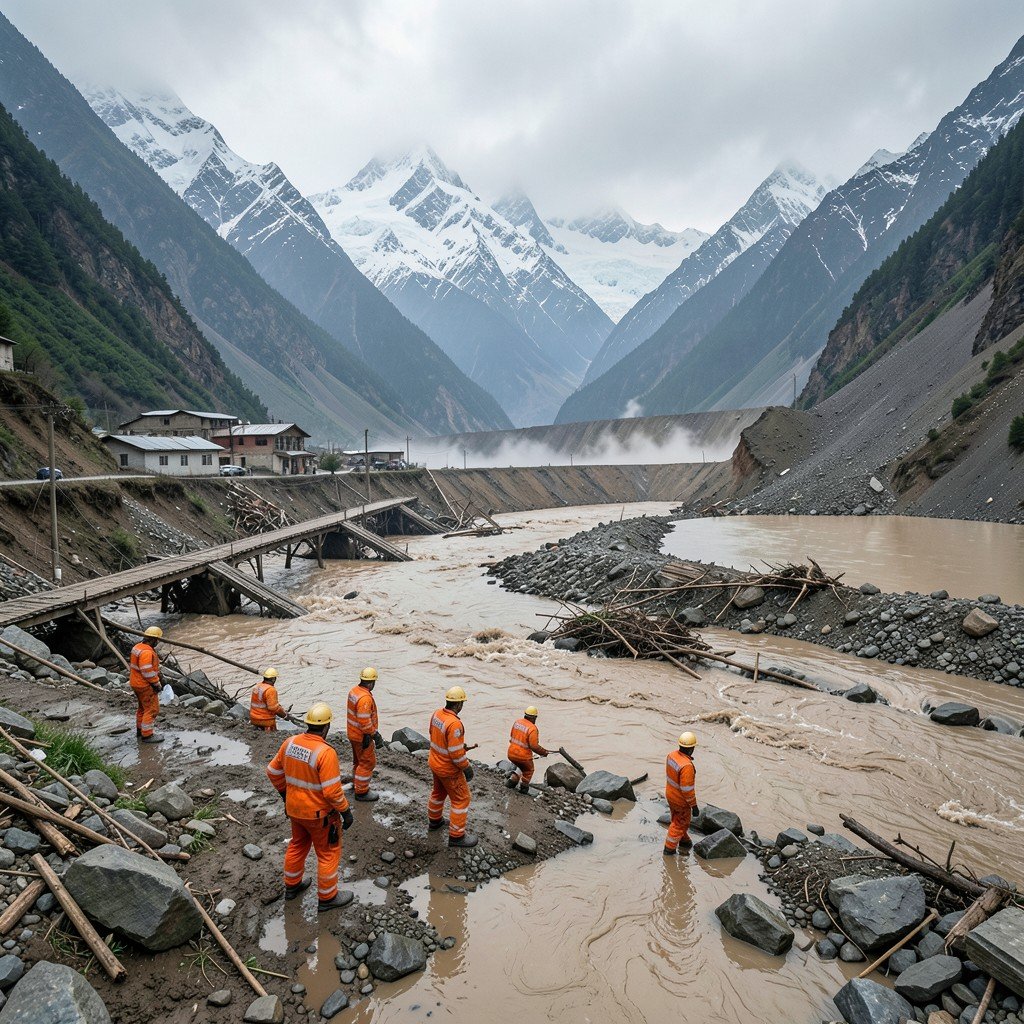
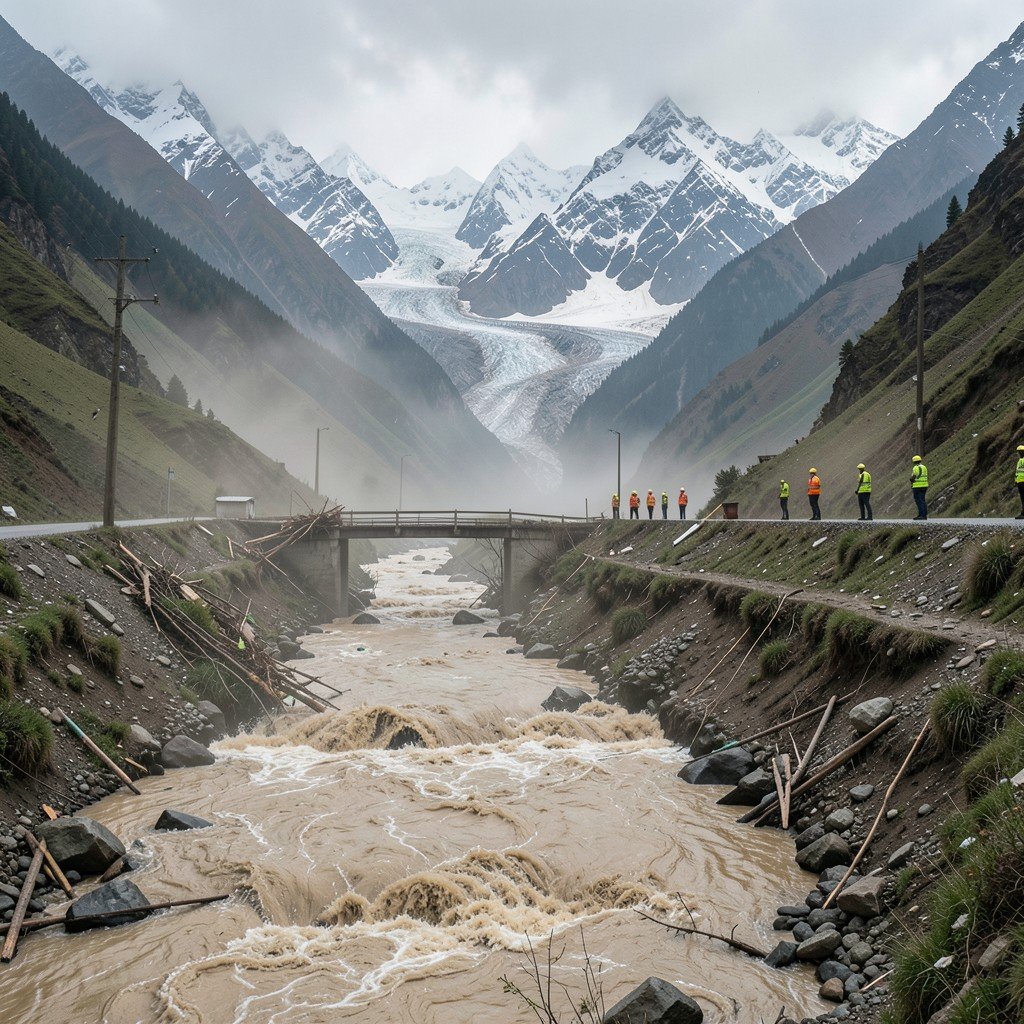
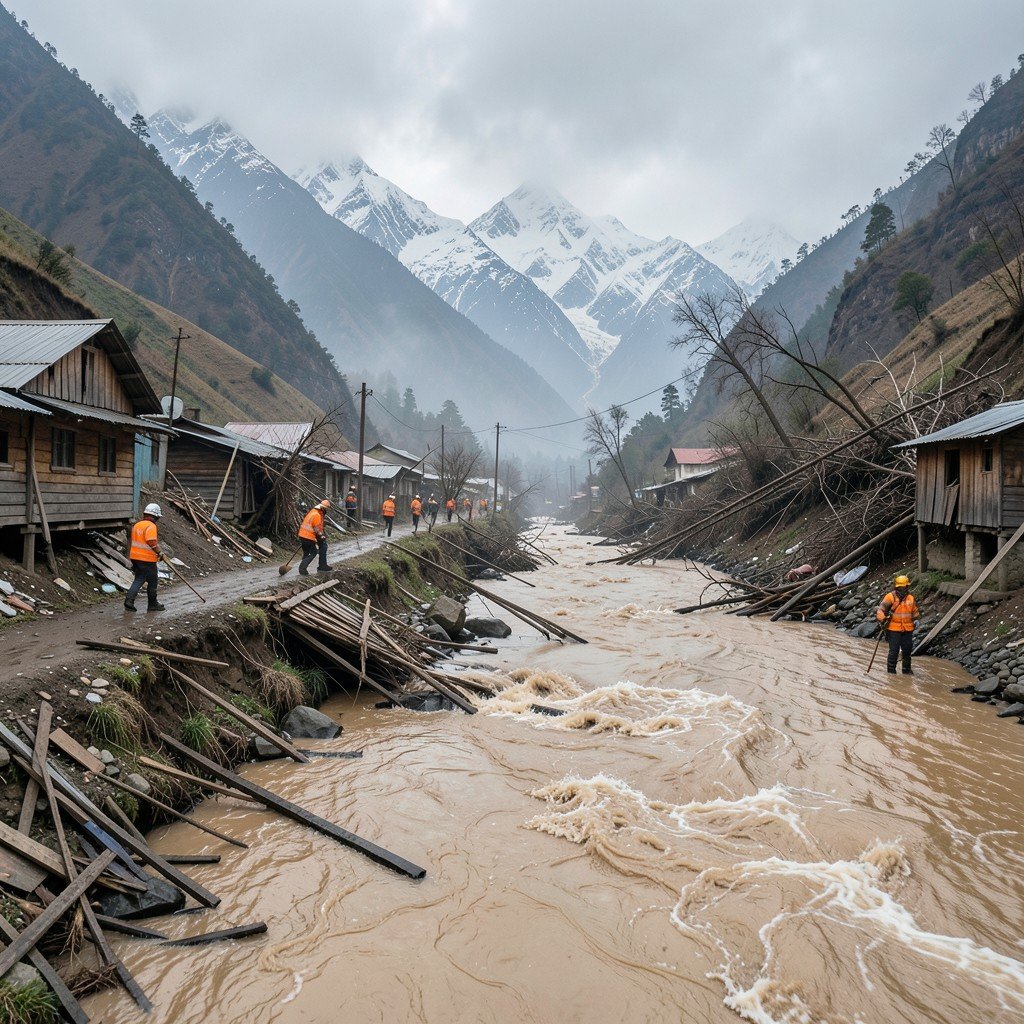
AI-generated representative image: Rescue workers survey debris and a swollen glacial river in the Himalayan region after a devastating flash flood.
Editorial Team
Editorial Team
Rescue operations continue across the Himalaya as an unstable barrier lake raises fears of secondary flooding and further devastation.

The death toll from the flash flood that devastated parts of Nepal and Tibet has risen past 470, with hundreds more still missing as rescue operations continue on both sides of the Himalayan border.

Nepal's prime minister's office confirmed on Friday that 469 people were killed and 977 remain missing, while Chinese authorities reported at least three deaths and 558 missing in Tibet. The disaster struck on Wednesday when a glacier collapse sent a surge of ice, water, rock and mud down Himalayan river valleys.

The scale of the disaster has overwhelmed local infrastructure, with entire villages buried and roads, bridges and hydropower plants destroyed. Authorities now face a race against time as a newly formed barrier lake threatens to burst and trigger secondary flooding across the already devastated region.

The situation is compounded by the fact that 644 of Nepal's missing are foreigners, raising the international stakes of an operation that has so far rescued about 1,550 people.

Rescue Operations and Mounting Challenges

Nepal has deployed 30,000 security personnel to search remote valleys, while China has mobilized about 500 military and paramilitary personnel and sent Premier Li Qiang to supervise operations. Bishal Nath Upreti, president of the Nepal Centre for Disaster Management, described the situation as "extremely difficult" for those stranded, noting that almost 42 kilometres of road has been completely wiped out.

  • About 800 people have been rescued by helicopter and 700 by land
  • Aid is being airlifted to survivors who have now been stranded for more than 72 hours
  • Rescue teams attempting to reach the border port of Gyirong have been ordered to pause because of mudslide fears
How the Disaster Unfolded

The catastrophe began on Wednesday when a glacier collapse triggered a massive surge of ice, water, rock and mud that swept through Himalayan river valleys. The force of the flood buried entire villages and destroyed critical infrastructure including roads, bridges and hydropower plants.

Attention has now turned to a newly formed barrier lake straddling the Nepal-China border. Barrier lakes form when flooding or landslides block a river, trapping a growing body of water behind a natural dam of debris. Both countries have warned that the lake is unstable and at risk of bursting.

Barrier Lake Threat and Official Warnings

Chinese authorities warned that the barrier lake currently holds about two million cubic metres of water and is expected to receive another three million cubic metres over the next three days. This has created what officials describe as an anxious ticking clock, with teams racing to find survivors and recover bodies before additional mud makes the operation increasingly dangerous.

At the border port of Gyirong, buildings lie buried under mud one and a half metres deep. Rescue and military teams have been ordered to pause their work there due to mudslide fears, further complicating efforts to reach those who may still be trapped.

What Lies Ahead

Nepal's foreign ministry said on Friday that the country does not currently require international assistance with the search operation. Spokesperson Lok Bahadur Chhetri stated that security agencies are handling search and rescue, though the government has appealed for other forms of aid including cash disbursements.

Near Tribhuvan University Teaching Hospital in Kathmandu, crowds have gathered to inquire about missing loved ones. The number of missing is expected to increase as authorities continue their efforts, and officials have not yet confirmed when full operations might resume in areas affected by mudslide risks.

MORE LIKE THIS

Comments (0)

Leave a comment

A verified Gmail account is required to post comments.

No comments yet. Be the first to share your thoughts!