
Greece Israel $3.5bn Air Defence Deal Signed for Missile Network
news

Greece Israel $3.5bn Air Defence Deal Signed for Missile Network

By Editorial TeamAug 31, 2026 · 6:31 PM3 min read
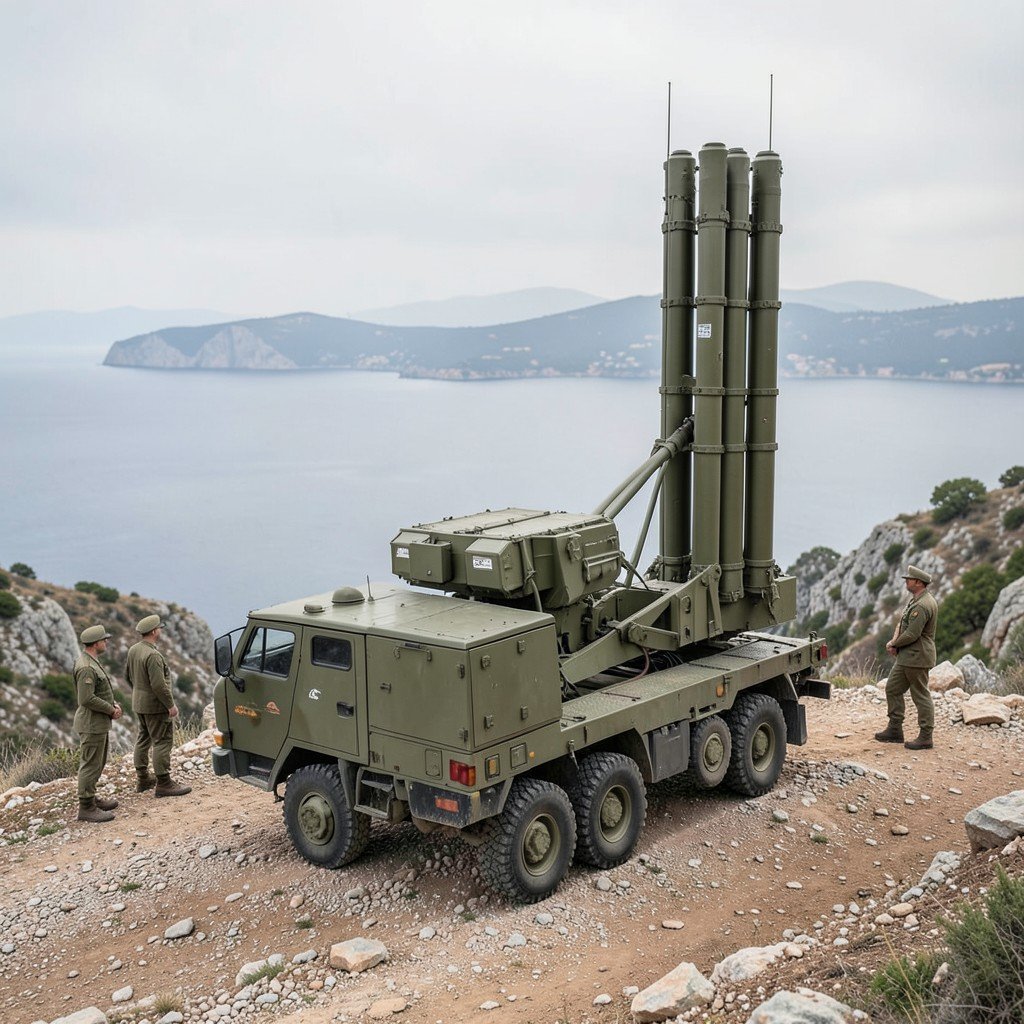
AI-generated representative image: A mobile air defence missile system positioned near a Greek coastal hillside, illustrating Greece's new multi-layered air def
Editorial Team
Editorial Team
Greece secures its first integrated multi-layered air defence system combining SPYDER and BARAK missile technology from Israel

Greece has signed a $3.5 billion defence agreement with Israel to establish its first integrated "multi-layered" air defence network. Israel described the deal, negotiated over three years, as one of the largest in the country's history, according to an Israeli defence ministry statement issued on Monday.

The agreement marks a significant expansion of Greece's military capabilities at a time when European security priorities are shifting in response to the war in Ukraine and regional tensions in the Gulf. It also positions Israel as a growing defence supplier to European Union members despite widespread international criticism of its military operations.

Key Elements of the Agreement

Under the deal, engineers will establish an aerial defence shield integrating three Israeli systems: the SPYDER system produced by Rafael Advanced Defense Systems, the BARAK MX system made by Israel Aerospace Industries, and David's Sling air defence technology.

Separately, Greece signed a $30 million agreement with Israel for Rafael's Drone Dome system, intended to defend strategic sites against unmanned aerial vehicles and drones while reinforcing existing defences.

Greece becomes the second European Union member to agree to purchase the David's Sling system, following Finland.

Europe's Changing Security Landscape

The agreement reflects Greece's reassessment of its defence needs in light of the war in Ukraine, which has transformed the nature of armed conflict and highlighted the importance of robust air defence capabilities. Analysts note that Greece is interpreting these lessons to strengthen its ability to intercept aerial threats from the East.

Regional dynamics have also shifted, with the war in the Gulf reawakening Iranian tensions toward United States allies in Europe, creating a perceived threat from that direction as well as from other eastern countries. Greece spends nearly 3.5 percent of its gross domestic product on defence, a higher proportion than many NATO allies, driven by its long-standing dispute with neighbouring Turkiye.

System Capabilities and Official Statements

The integrated systems are designed to counter a range of aerial threats. The SPYDER and David's Sling are short-to-medium-range air defence missile systems that intercept incoming aircraft, cruise missiles and large drones. The BARAK MX performs these functions while also intercepting incoming ballistic missiles.

"Modern conflicts have already altered the parameters of military defence and deterrence," Greece's Defence Minister Nikos Dendias said in a statement after the agreement was signed. He added that technology, ballistic missiles, satellite communications, unmanned systems, cyber threats, hybrid forms of warfare and the interconnection of fields of operations "have long rendered pre-existing defence doctrines completely unrealistic."

Rising Israeli Defence Exports

The agreement comes as Israeli weapons exports continue to climb, reaching record highs of more than $19 billion last year, a 30 percent increase from 2024, according to official data. Further details on the implementation timeline for the Greek air defence network have not yet been announced.

MORE LIKE THIS

Comments (0)

Leave a comment

A verified Gmail account is required to post comments.

No comments yet. Be the first to share your thoughts!