

FCC Votes to End 39% Local TV Station Ownership Cap
news

FCC Votes to End 39% Local TV Station Ownership Cap

By Editorial TeamAug 7, 2026 · 9:52 AM4 min read
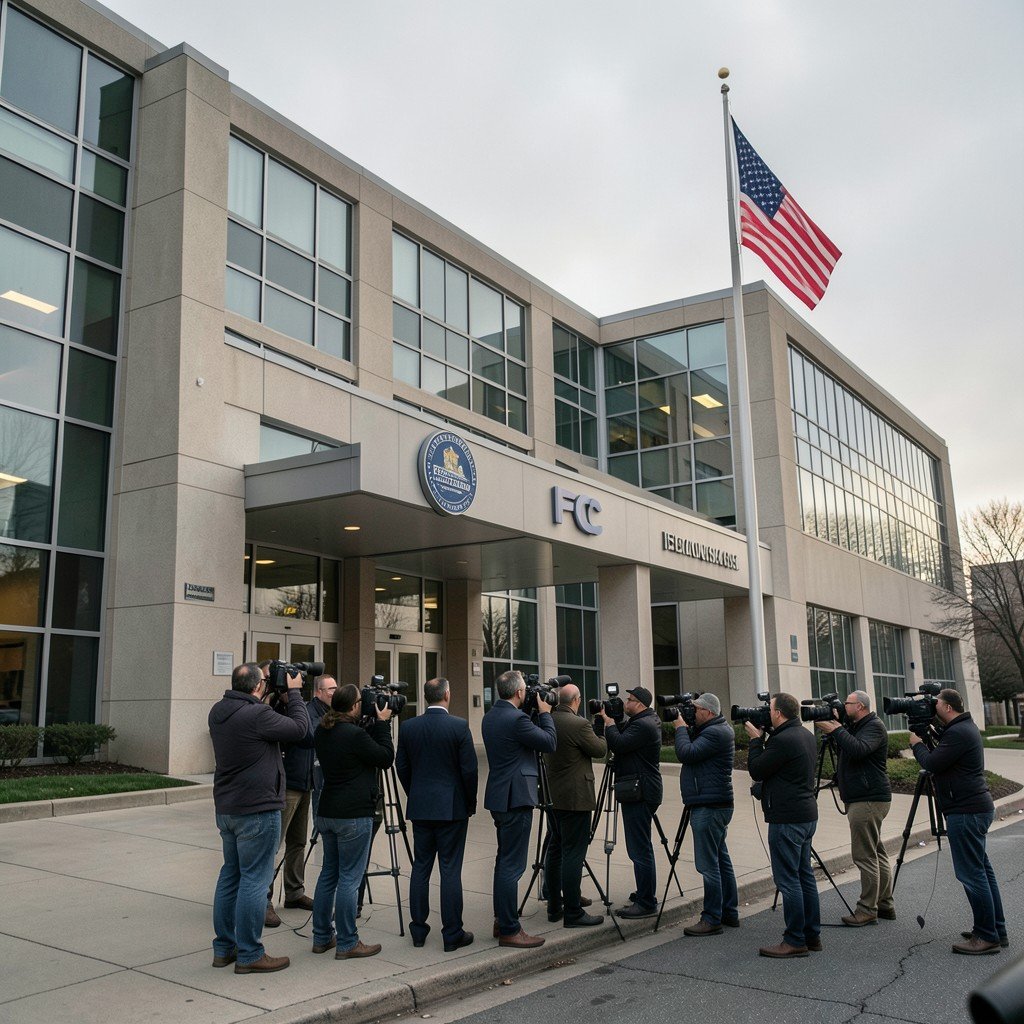
AI-generated representative image: The Federal Communications Commission headquarters in Washington, D.C., where the FCC voted 2-1 to eliminate the 39% local TV
Editorial Team
Editorial Team
The 2-1 decision shifts broadcast ownership to a case-by-case review process, triggering concern over media consolidation

The United States Federal Communications Commission voted 2-1 on Thursday to eliminate the rule that prevented local broadcast station owners from reaching more than 39 percent of American TV households, replacing the long-standing cap with a case-by-case review system.

The decision marks the most significant change to US broadcast ownership rules in over two decades and has sparked immediate backlash from media freedom advocates, who warn it will accelerate consolidation among already powerful media conglomerates.

The vote carries major implications for the American media landscape. By removing the ownership ceiling, the FCC opens the door for large broadcasting companies to expand their reach across a far greater share of the national audience, potentially reshaping which voices and perspectives dominate local television markets.

Critics argue the move concentrates control of public airwaves in fewer hands, while supporters contend it is necessary to help local broadcasters compete in a rapidly changing media environment.

What the Vote Changes

The rescinded rule, in place in various forms since 1941, capped any single broadcast station owner from reaching more than 39 percent of total US TV households. Under the new framework, merger applications that would exceed that threshold will be evaluated individually to determine whether they serve the public interest.

FCC Chairman Brendan Carr framed the decision as essential for the survival of local broadcasters, citing the steep decline of local newspapers. "We should stop hamstringing this one segment of the broader market with outdated restrictions," Carr said, adding that he does not want local broadcast TV to follow the same path as local newspapers.

The agency stated the change would "remove artificial restrictions on opportunities for broadcast television to attract capital and generate revenue."


Decades of Ownership Limits

The FCC has regulated local broadcast station ownership since 1941. The cap was most recently adjusted in 2004, when it was raised to the 39 percent threshold that remained in place until Thursday's vote. Under the previous system, stations with weaker over-the-air signals could be partially counted against a company's ownership cap, providing some flexibility within the overall limit.

In March, the FCC approved the $3.54 billion sale of local television station owner Tegna to Nexstar, waiving the 39 percent rule to allow the transaction. That acquisition, if not reversed by the courts, will expand Nexstar's reach to cover 80 percent of US TV households, offering a preview of the consolidation the new policy could enable.

Opposition and Legal Questions

The commission's sole Democrat, Anna Gomez, argued the proposal was illegal and that only Congress has the authority to lift the cap. She described the decision as "an invitation to bring in a lot of transactions" and warned it hands "more control of the public airwaves to a small number of companies whose coverage pleases this administration."

Senate Commerce Committee Chair Ted Cruz, a Republican, expressed skepticism last month that the FCC could raise the cap without congressional action. Clayton Weimers, executive director at Reporters Without Borders North America, said the FCC had "abandoned" one of the last significant safeguards against excessive media concentration. "This is not deregulation in the public interest. It is consolidation in the interest of the powerful," Weimers said, adding that the organization is evaluating every available legal avenue to challenge the decision.

What Lies Ahead

The new case-by-case system is now in effect, meaning broadcast companies can immediately seek FCC approval for mergers that would push them beyond the former 39 percent threshold. Each application will be reviewed individually for public interest considerations.

Legal challenges appear likely. Reporters Without Borders has confirmed it is exploring options to contest the decision, and questions remain about whether the FCC overstepped its statutory authority by eliminating a cap that some lawmakers argue only Congress can modify.

MORE LIKE THIS

Comments (0)

Leave a comment

A verified Gmail account is required to post comments.

No comments yet. Be the first to share your thoughts!