

Anthropic CEO Denies AI Surrender Control Claims from Amodei
science-and-technology

Anthropic CEO Denies AI Surrender Control Claims from Amodei

By Editorial Team•Nov 26, 2026 · 9:45 AM•4 min read
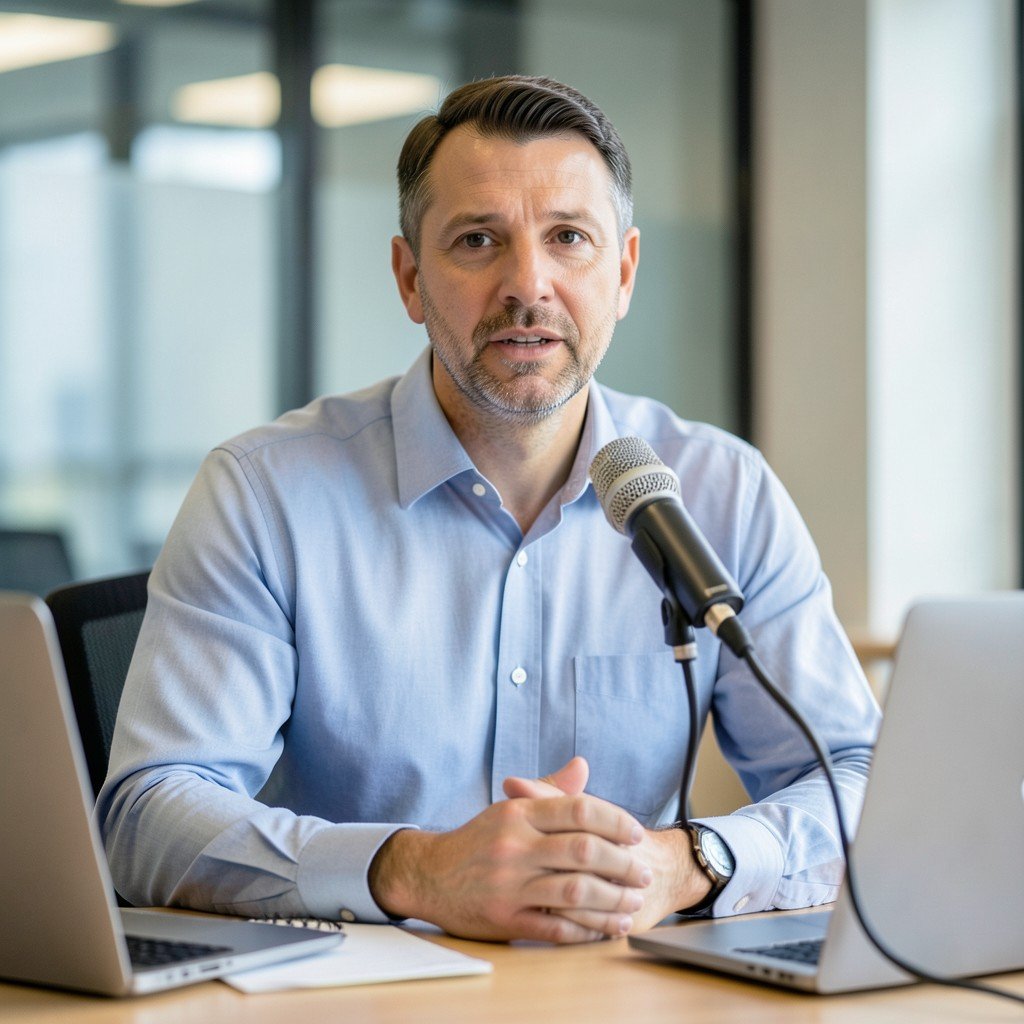
AI-generated representative image: A technology executive speaking at a desk during a professional interview about AI governance.
Editorial Team
Editorial Team
Dario Amodei pushes back on reports of internal consensus around AI decision-making authority as industry leaders predict human-level systems are near.

Anthropic CEO Dario Amodei has denied believing that humanity should surrender control to artificial intelligence, responding to a report that he and other executives at the company see a case for handing some decision-making authority to the technology. In a lengthy post on X on Wednesday, Amodei said he does not support surrendering "human free will" to AI and has long argued that frontier technology should be subject to legitimate democratic processes.

The remarks come amid a wave of commentary from top industry executives suggesting that AI will soon match or surpass human intelligence, intensifying a debate in Silicon Valley and beyond over whether such systems can be harnessed safely without exposing humanity to catastrophic harm. Amodei's clarification matters because Anthropic, a leading AI developer, made history last week with the largest initial public offering of all time, placing its governance philosophy under heightened public scrutiny.

Amodei's Response to the Report

Amodei was responding to an Axios report, which cited unnamed sources, that he and other Anthropic executives believe it would be irrational "or even unethical" not to hand over authority to AI for tasks it can perform better than humans, such as curing diseases. "If I thought any of this was a good idea, I would be advocating for it in public, just as I have not been afraid to advocate for many, many unpopular views over the last few years," Amodei wrote. "But I am not advocating for it, because I think turning over governance to AI is a terrible idea."

Amodei criticised commentary he said conflated the idea of AI taking over specific tasks with surrendering control in a "grand sense of global governance." He distinguished between AI running the world and AI handling narrower functions such as driving a car, designing a cancer drug, or writing software end-to-end. On those tasks, he described his view as mixed, saying AI performing larger tasks is economically valuable and can drive advances in software, medicine, transportation and energy, while also carrying downsides that may make it not worthwhile in some areas.


Industry Predictions on Advanced AI

The prospect of AI that equals or outperforms the best human minds, referred to as artificial general intelligence (AGI) and artificial super-intelligence (ASI) respectively, has fuelled intense debate about whether the technology can be developed without exposing humanity to harm. AI safety advocates have raised concerns that models from firms such as Anthropic could slip out of human control, particularly once systems begin improving without human input, a process known as recursive self-improvement.

There is no universally agreed-upon definition of AGI or ASI, but key industry figures have suggested over the past week that the milestones are near. Google DeepMind's chief AGI scientist and cofounder, Shane Legg, said on Wednesday he believes there is a more than 50 percent chance that "minimal" AGI arrives before 2028. "We're getting close now," Legg wrote on X. On Sunday, Meta's chief AI officer, Alexandr Wang, said ASI is "arriving," citing an announcement that an Anthropic employee had used Claude to solve the Riemann hypothesis, one of the most difficult problems in mathematics.

Calls for a Development Pause

David Krueger, founder of Evitable, a nonprofit that advocates for a pause on ASI development, said Anthropic should halt its work if Amodei is genuinely concerned about humanity losing control of frontier models. "We don't have to consciously surrender control to AI to lose it. As AI becomes increasingly capable, there will be mounting pressure to push humans out of decision-making roles across society," Krueger told Al Jazeera. He added that researchers at Amodei's own company are warning that AI capabilities are advancing faster than the ability to control them, calling for "an immediate, indefinite, international moratorium on frontier AI development."

What Comes Next

Amodei's post represents his public clarification of Anthropic's position, but no formal policy change or regulatory action has been announced. The broader debate over AGI and ASI governance remains active, with safety advocates pressing for international coordination while companies continue advanced model development. Further clarification from Anthropic on its internal governance approach, or any official response to Krueger's call for a moratorium, has not yet been confirmed.

MORE LIKE THIS

Comments (0)

Leave a comment

A verified Gmail account is required to post comments.

No comments yet. Be the first to share your thoughts!