
UN Mission Finds US May Have Committed War Crimes in Iran Strikes
news

UN Mission Finds US May Have Committed War Crimes in Iran Strikes

By Editorial TeamSep 18, 2026 · 3:33 PM4 min read
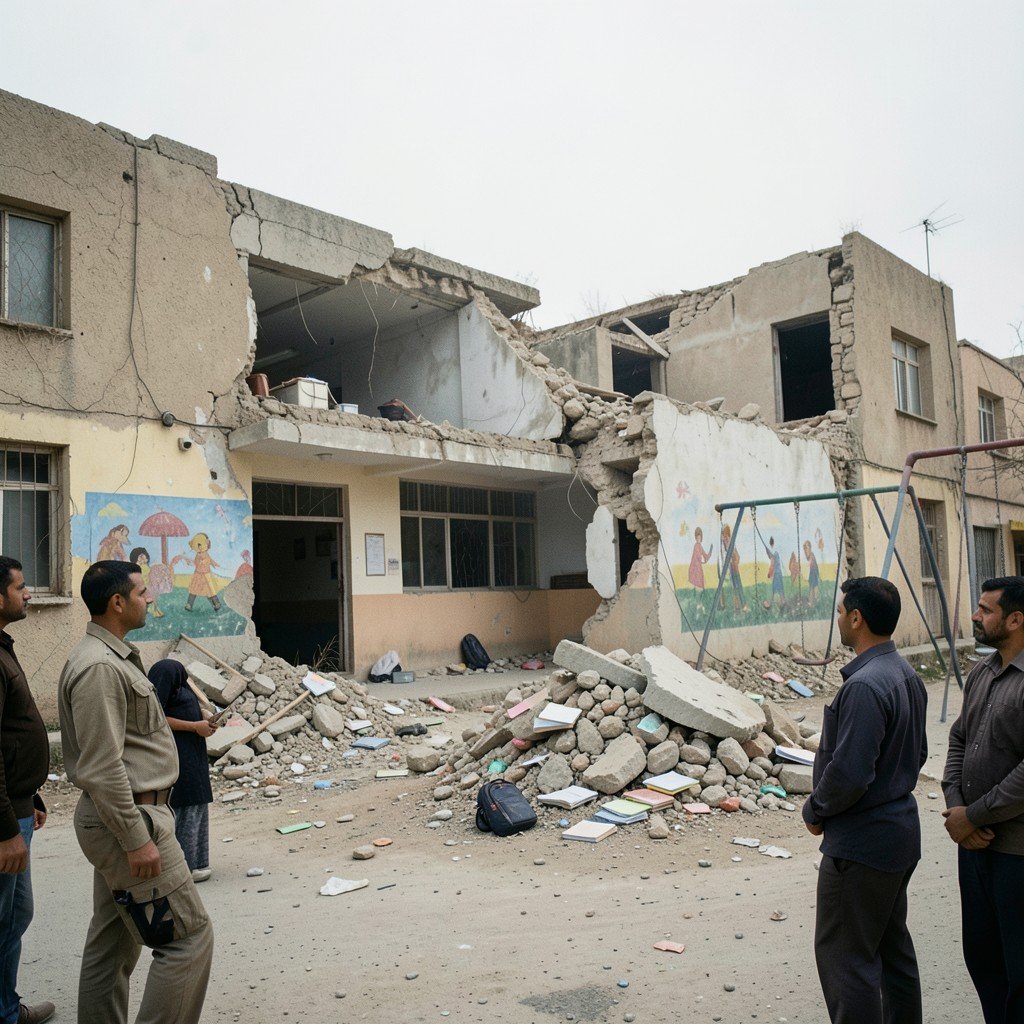
AI-generated representative image. A damaged school building in Minab, Iran, following the February 2026 strikes investigated by a UN fact-finding mission.
Editorial Team
Editorial Team
Fact-finding report says Washington acted recklessly in February attacks on a Minab primary school and a Lamerd sports complex

A United Nations-mandated fact-finding mission has concluded that the United States may have committed war crimes in two strikes on Iran in February 2026, one on a primary school in Minab and another on a sports complex in Lamerd. The Independent International Fact-Finding Mission on the Islamic Republic of Iran submitted its findings to the UN Human Rights Council after months of investigation, determining there were reasonable grounds to believe the US acted recklessly.

The report carries significant weight because it is the first formal international assessment of civilian casualties during the US-Israeli war on Iran, which began amid stalled nuclear negotiations. Hundreds of civilians, including many children, were killed in the two strikes, and the findings could shape future accountability efforts even if they carry no automatic legal consequences.

Key Findings of the Mission

The mission found the US failed to verify that the Shajareh Tayyebeh Primary School in Minab was a military objective before striking it. The school was roughly 72 metres from an Islamic Revolutionary Guard Corps naval facility but was separated by a wall, had its own entrance, and was clearly visible in satellite imagery as a functioning school with murals, a playground and classrooms.

Investigators determined the school was struck twice on February 28. The first strike hit the lower floor, and as staff moved children to an upstairs prayer room, a second strike hit the upper floor, killing many of them. Local officials reported 156 deaths, including 120 schoolchildren and 26 female teachers, while independent sources cited by the mission put the toll at 157.

The same day, an air strike hit the Shahid Haj Khalil Naimi Cultural and Sports Complex in Lamerd, Fars province, a facility the mission said had no military use. Local officials reported 22 deaths, including four children, and more than 100 injuries, with an adjacent school also damaged.

Background of the Conflict

The strikes occurred during the opening hours of the joint US-Israeli assault on Iran, launched amid stalled nuclear negotiations. Neither Washington nor Israel granted the mission access to personnel or responded to its requests for information, so investigators relied on satellite imagery, verified video, weapons analysis and witness accounts from Iranian sources and independent organisations.

Weapons analysts identified a missile fragment from the Minab strike as a US Tomahawk Land Attack Missile, which Iran does not possess. The Trump administration initially blamed Iranian forces for the school strike but later stopped disputing responsibility. The mission cited reporting revealing that a preliminary Pentagon investigation attributed the strike to outdated intelligence that had wrongly identified the school as part of the adjacent military site.

Washington continues to dispute responsibility for the Lamerd strike, with CENTCOM claiming the damage is consistent with an Iranian Hoveyzeh cruise missile. The mission rejected that finding, citing weapons experts who identified design differences and pointed instead to a US-made Precision Strike Missile, a weapon the US has publicly confirmed using in Iran for the first time.

Legal Analysis and Official Responses

Reed Brody, a human rights lawyer and member of the International Commission of Jurists, explained that the relevant legal standard is recklessness rather than intent. The mission described the US as acting with "dolus eventualis," a mental state legally sufficient to establish the war crime of launching an indiscriminate attack. Brody said the recklessness finding rests on three factors: outdated targeting data, a building readily identifiable as a school, and an administration that weakened systems meant to minimise civilian harm.

The White House disputes the findings. Deputy Press Secretary Anna Kelly called the UN Human Rights Council unserious and said the only party committing war crimes is the Iranian regime. Iran has rejected US denials of the Lamerd strike and cited both attacks as evidence of indiscriminate strikes against civilians, with officials publishing casualty figures of 156 in Minab and 22 in Lamerd.

What Happens Next

The report carries no automatic legal consequences, but Brody said such findings can form the basis for other proceedings, as UN reports have in cases before the International Court of Justice. The US has withdrawn from the ICJ, and Iran is unlikely to join the International Criminal Court. The mission urged an immediate end to US-Iran hostilities and called for victim reparations and diplomatic paths toward lasting peace.

MORE LIKE THIS

Comments (0)

Leave a comment

A verified Gmail account is required to post comments.

No comments yet. Be the first to share your thoughts!