

New Ebola Variant Linked to Unknown Animal Source in DR Congo-Uganda Outbreak
news

New Ebola Variant Linked to Unknown Animal Source in DR Congo-Uganda Outbreak

By Editorial TeamAug 12, 2026 · 2:46 PM3 min read
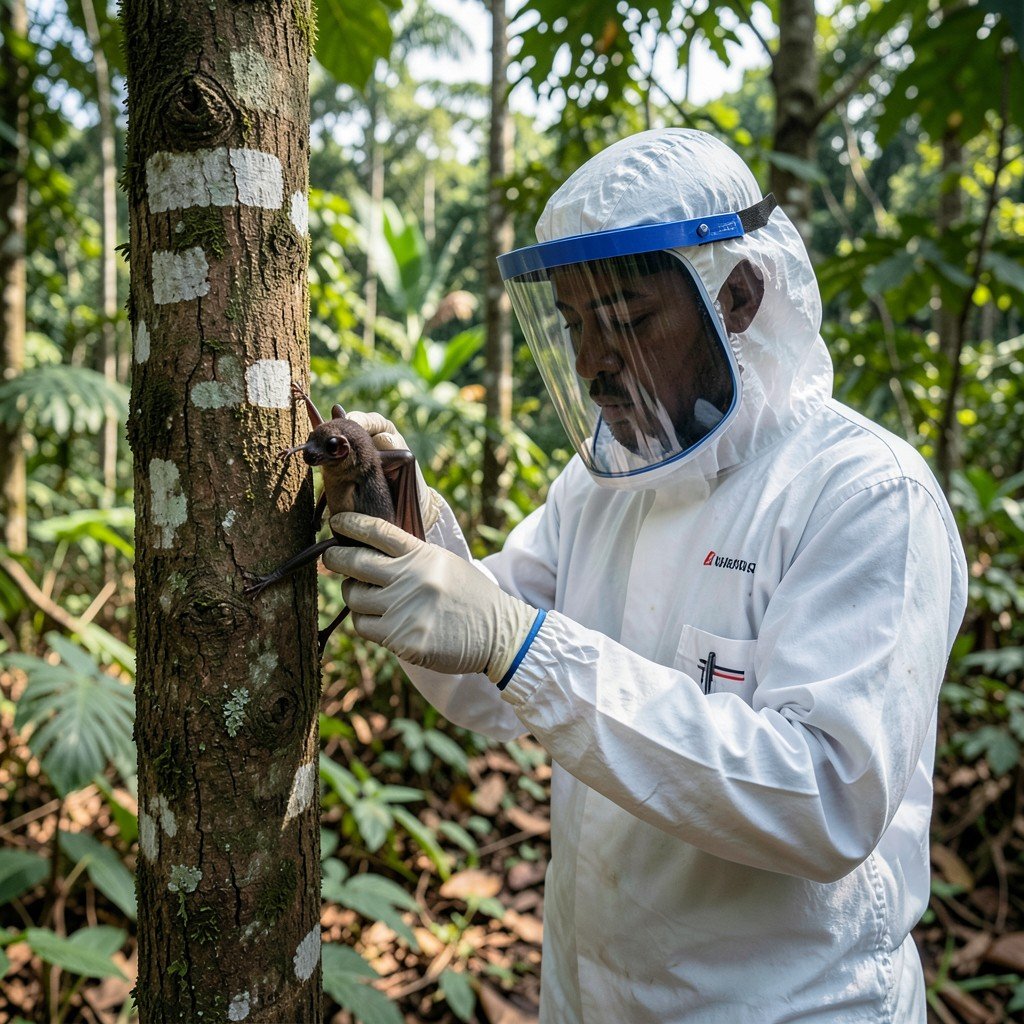
AI-generated representative image. A researcher collects a bat specimen in eastern DR Congo, illustrating animal-to-human transmission investigation of the new
Editorial Team
Editorial Team
Genomic analysis confirms the 2026 Bundibugyo virus outbreak stemmed from a fresh animal-to-human spillover, not a resurgence of prior epidemic strains.

A new variant of the Ebola-causing Bundibugyo virus responsible for the 2026 outbreak in the Democratic Republic of the Congo and Uganda originated from a previously unknown animal source, according to a study published in Nature Medicine on Monday.

Researchers analyzed 22 viral genomes from infected individuals across both countries and found the strain forms a distinct genetic cluster, confirming it emerged through a fresh animal-to-human transmission event rather than re-emerging from earlier epidemic strains.

The finding is significant because it shifts the understanding of the current outbreak, which the World Health Organization has already described as the largest Ebola epidemic ever recorded in DR Congo. Rather than a flare-up of a known viral reservoir, the crisis stems from an entirely new spillover event whose animal origin remains unidentified, complicating containment and future prevention efforts.

Outbreak Scale and Spread

As of August 10, the outbreak has spread across 53 health zones in five provinces of DR Congo, with Ituri province remaining the main epicenter, according to the country's Health Ministry. Authorities have recorded 4,449 confirmed cases and 2,061 deaths, placing the fatality rate at 46.3%.

WHO Director-General Tedros Adhanom Ghebreyesus warned last week that the disease is spreading faster than containment efforts can match. The agency has classified this as the largest Ebola epidemic in DR Congo's history, surpassing the 2018-2020 outbreak.

Neighboring Uganda declared itself Ebola-free last month after recording 20 cases, 15 of which were imported from DR Congo. Two people died and 18 recovered.


Previous Bundibugyo Outbreaks

The Bundibugyo virus, or BDBV, is not new to the region. It belongs to the same viral family as the better-known Zaire ebolavirus and can cause severe Ebola disease. Previous outbreaks caused by variants of this pathogen occurred in Uganda in 2007-2008 and in DR Congo in 2012.

Typically, this form of the virus is carried by fruit bats and spreads to humans through direct contact with infected animals or bodily fluids from infected individuals. Symptoms include fever, severe headaches, muscle and body pain, weakness, fatigue, sore throat, vomiting, diarrhea, stomach pain, and loss of appetite.

What distinguishes the current outbreak is that genomic evidence confirms it did not arise from dormant strains linked to those earlier epidemics but from a separate, independent animal-to-human transmission.

Genomic Findings and Research Recommendations

The study's conclusion rests on the analysis of 22 viral genomes collected from patients in both DR Congo and Uganda. These genomes formed a distinct genetic cluster clearly separate from variants associated with the 2007-2008 and 2012 outbreaks, ruling out the possibility that the current crisis is a resurgence of previously circulating strains.

Despite confirming the spillover origin, researchers have not yet identified the specific animal species responsible for transmitting the virus to humans. The study's authors called for broader local diagnostic capacity and expanded genomic surveillance to detect future outbreaks at an earlier stage, arguing that faster identification of new spillover events could significantly reduce response times.

Containment Challenges Ahead

The WHO's warning that transmission is outpacing containment underscores the severity of the situation. With 53 health zones affected across five provinces and Ituri remaining the epicenter, health authorities face a widening crisis. Uganda's declaration of being Ebola-free offers a measured success, though the continued importation of cases from DR Congo highlights the cross-border nature of the threat. Further genomic surveillance and identification of the animal source remain priorities for preventing future spillover events.

MORE LIKE THIS

Comments (0)

Leave a comment

A verified Gmail account is required to post comments.

No comments yet. Be the first to share your thoughts!