
Netanyahu Calls for National Unity Government at Knesset Swearing-In
news

Netanyahu Calls for National Unity Government at Knesset Swearing-In

By Editorial Team•Nov 12, 2026 · 8:10 AM•4 min read
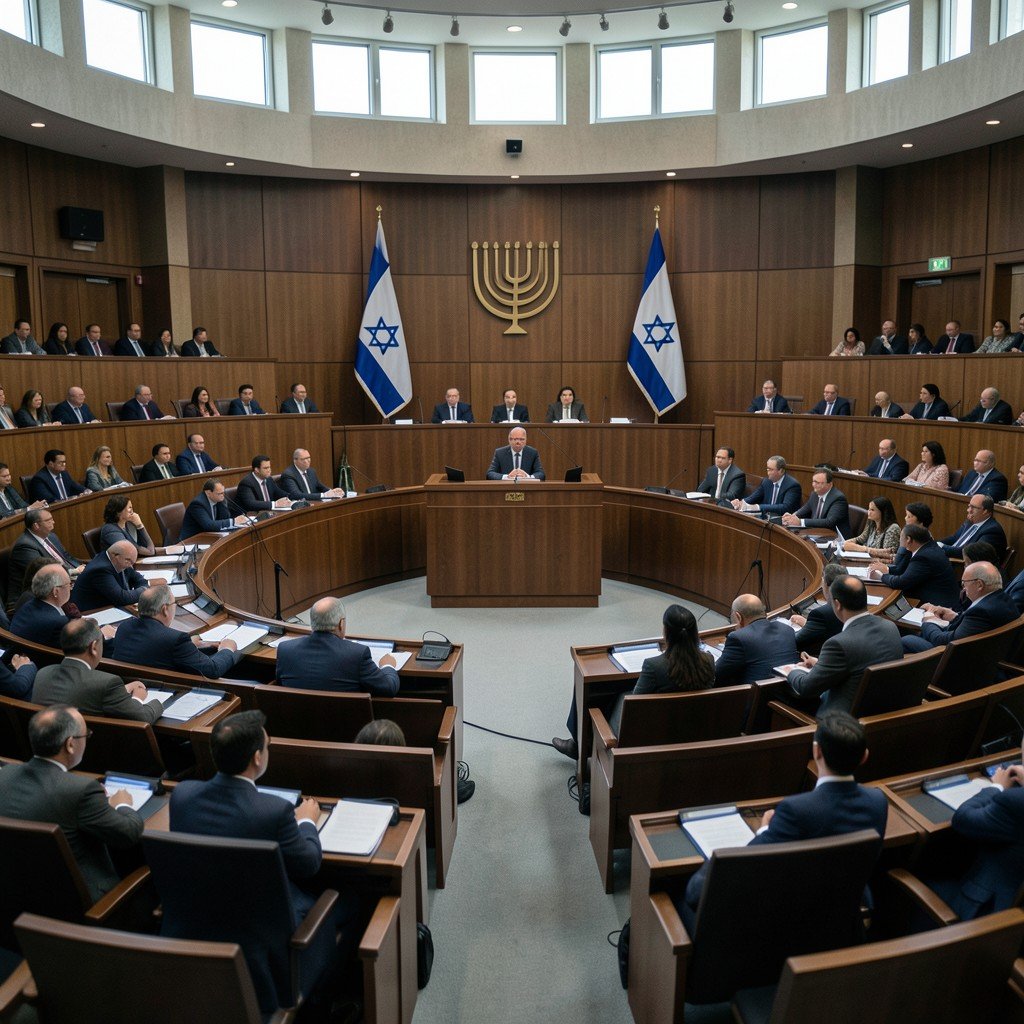
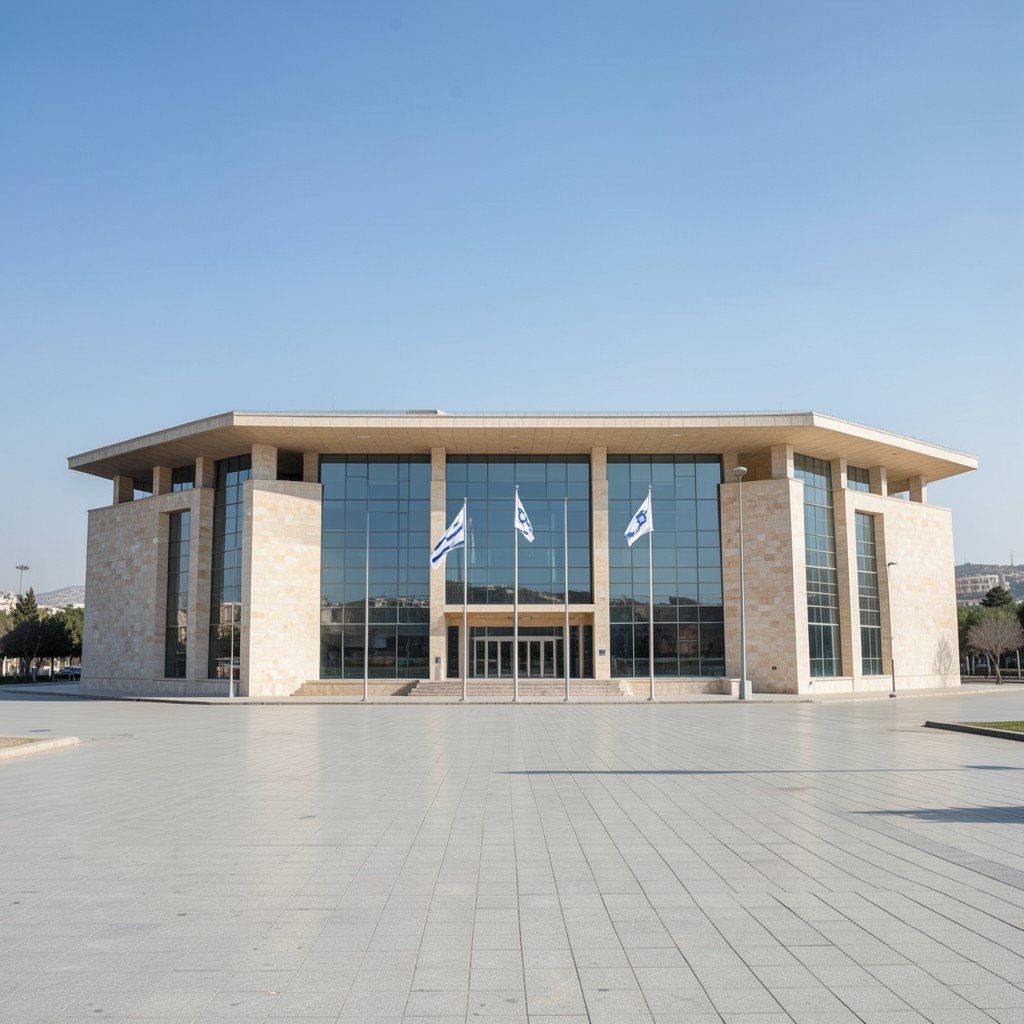
AI-generated representative image. The Knesset plenary hall in Jerusalem, where Israel's new parliament was sworn in amid a contentious session and calls for a
Editorial Team
Editorial Team
Opposition lawmakers heckle and walk out as the prime minister warns against a narrow coalition amid political isolation.

Prime Minister Benjamin Netanyahu called for a national unity government during the swearing-in of Israel's new Knesset on Tuesday, urging opposition parties to set aside differences as he fights to remain in power. The opposition bloc, which holds a majority of seats but has yet to form a government, responded with heckles, catcalls, and walkouts during a session analysts described as unusually contentious.

The confrontation marks a pivotal moment in Israeli politics, where Netanyahu, the country's longest-serving prime minister, now faces the prospect of being frozen out of government for the first time in years. If opposition leader Gadi Eisenkot succeeds in forming a coalition, Netanyahu would face his corruption trial without the protection of the prime minister's office, along with a likely inquiry into his government's failures ahead of the October 7, 2023 Hamas-led attack.

Knesset Session Turns Confrontational

Citing what he described as internal and external threats, Netanyahu pointed to Iran and accused Palestinian citizens of Israel serving as lawmakers of seeking Israel's destruction, without providing evidence. He argued that only a broad unity government could meet "challenges of this magnitude" and warned against a minority government that he claimed would include "terror supporters" and "haters of Israel."

The session descended into open hostility. Former Prime Minister Naftali Bennett heckled Netanyahu while exchanging barbs with the prime minister's wife, Sara, and hard-right ally Itamar Ben-Gvir. Many Palestinian lawmakers targeted in Netanyahu's speech walked out in protest.

Following the session, Gadi Eisenkot, who has been given the first opportunity to form a new government, cancelled previously scheduled coalition talks with Netanyahu and declared him "unfit for office."
Personality Politics and Netanyahu's Legacy

Netanyahu has long played an outsized role in reshaping Israeli democracy, helping transform the political system into one centered on individual leaders rather than parties or policy platforms. Analysts say voters now typically identify with a leader first and consider policy second, a shift Netanyahu contributed to more than any other politician.

Roi Zur, an Israeli specialist in voting behaviour and election strategies at the University of Essex, said Netanyahu "Americanised the party system in Israel and made Likud a populist party." He added that voters now say "I vote for Netanyahu, I vote for Bennett, I vote for Eisenkot," whereas in the past they identified with parties such as Likud or Labor.

If Eisenkot forms a viable government, Netanyahu faces being frozen out of power, the continuation of his corruption trial without prime ministerial protection, and a likely official inquiry into his government's handling of the period leading up to the October 7, 2023 attack.

Analysts Warn of Toxic Populism

Dahlia Schneidlin, an American-Israeli pollster, noted that Israeli campaigns have become increasingly personalised over recent decades even though elections are based on voting for party slates rather than individuals. She said forming a coalition requires leaders to demonstrate "political negotiating and bargaining skills," something Eisenkot will need to show rather than relying on his own personality.

Yossi Mekelberg, a senior fellow at Chatham House, warned that the emphasis on personality over policy has fuelled a toxic political culture. "With party structures so centralised, leaders can become almost dictatorial and get to act without constraint," he said. "This is how it becomes possible for a prime minister to accuse 19 elected members of the Knesset of being terrorist sympathisers and nobody thinks it's extraordinary. It's become toxic."

What Happens Next

Coalition negotiations remain ongoing, and it is not yet confirmed whether Eisenkot will succeed in assembling a governing majority. If he does, Netanyahu would be removed from power, ending his tenure as prime minister and leaving him to face his corruption trial and a potential inquiry without the protections of office. Further developments are awaited as coalition talks continue.

MORE LIKE THIS

Comments (0)

Leave a comment

A verified Gmail account is required to post comments.

No comments yet. Be the first to share your thoughts!