
Beirut Port Explosion Investigation Enters Decisive Phase Six Years On
news

Beirut Port Explosion Investigation Enters Decisive Phase Six Years On

By Editorial TeamAug 4, 2026 · 2:28 PM4 min read
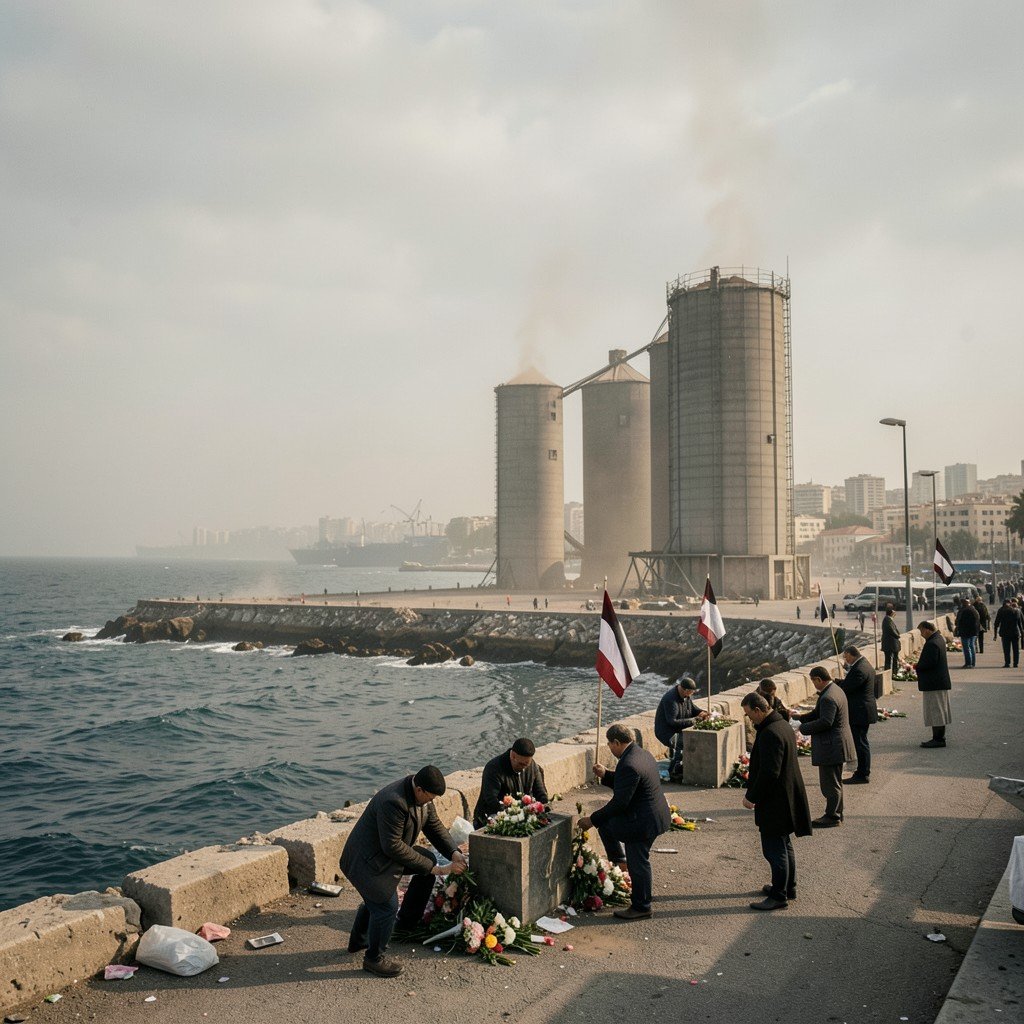
AI-generated representative image: The Beirut port waterfront six years after the devastating ammonium nitrate explosion, as families continue to seek justice.
Editorial Team
Editorial Team
Judge Tarek Bitar finalizes indictment as families demand swift trials after years of political obstruction

Six years after one of the largest non-nuclear explosions in modern history devastated Beirut, families of the 218 victims are still fighting for accountability as the long-stalled judicial investigation enters a critical new phase.

The August 4, 2020 blast, triggered by the ignition of 2,750 tonnes of improperly stored ammonium nitrate at the city's port, wounded thousands and leveled entire neighborhoods. Now, with the case file sealed and referred to Lebanon's Court of Cassation, grieving relatives are demanding an end to years of political obstruction and the immediate commencement of formal trials.

The Beirut explosion remains an open wound not only for the hundreds of bereaved families but for Lebanon itself, exposing a deeply entrenched culture of political impunity that has systematically thwarted efforts to determine who abandoned the deadly cargo at the port and why no one acted despite years of official warnings.

The case has become a defining test of whether Lebanon's judiciary can hold senior political figures accountable, with families insisting that justice delayed for six years is justice denied.

Judicial Breakthrough After Years of Deadlock

Following the election of a new Lebanese government in 2025, acting public prosecutor Jamal Hajjar reversed the controversial decision of his predecessor Ghassan Oueidat, who had ordered the entire investigation halted. Hajjar permitted Judge Tarek Bitar to resume his work, breathing new life into the stalled probe.

According to Paul Naggear, whose three-year-old daughter Alexandra was killed in the blast, Judge Bitar finalized the indictment decision and officially sealed the case file in March 2026, referring it to the Court of Cassation for review. While this review stage has no strict legal timeframe and could extend for months, families are demanding its immediate conclusion so that formal trials can begin.


A History of Political Obstruction

Preliminary investigations established that the ammonium nitrate arrived at Beirut's port on a Moldovan-flagged ship in 2013, and that numerous senior officials were aware of the danger for years but failed to take action. Experts trace this negligence to a culture of impunity rooted in the aftermath of Lebanon's 1975-1990 civil war, when former militia leaders transitioned into political roles and systematically shielded themselves from prosecution.

The initial lead investigator, Judge Fadi Sawan, was sidelined after summoning prominent politicians for questioning. His successor, Judge Tarek Bitar, encountered similar resistance when senior political figures refused interrogation, citing parliamentary immunity. The judicial process reached its nadir when former Court of Cassation public prosecutor Ghassan Oueidat ordered the investigation halted entirely.

Human Toll and Enduring Grief

The explosion struck at exactly 6:07pm on August 4, 2020, after the Beirut Fire Brigade was dispatched to extinguish a blaze at the port's Hangar 12. Among the responding crew were Sahar Fares, a nurse who had become the brigade's first female operational member, and firefighter Joe Noun. Both were killed in the line of duty; their red helmets still hang at the fire station as a memorial.

In a testament to resilience, William Noun, Joe's brother, and Maria Fares, Sahar's sister, married three years after the blast and recently welcomed twins named Joe and Sahar. "They gave the family new hope, but they cannot take the place of Joe and Sahar, because every person has their own irreplaceable presence," William Noun told Voice of Urdu.

The blast also claimed three-year-old Alexandra Naggear, who was standing in her family's Mar Mikhael home when the shockwave struck. Her father Paul carried her through rubble-strewn streets, but she succumbed to her injuries days later. The image of Alexandra in her father's arms became a global symbol of the tragedy.

What Lies Ahead

The case file now sits with the Court of Cassation for a review process that has no legally mandated deadline. Families, led by figures such as Paul Naggear and William Noun, are pressing for an expedited conclusion so that formal trials can commence without further administrative delays.

Six years after the blast, the families' message remains unchanged: Beirut will not abandon its right to justice, and those responsible for the catastrophic negligence must finally face accountability in a court of law.

MORE LIKE THIS

Comments (0)

Leave a comment

A verified Gmail account is required to post comments.

No comments yet. Be the first to share your thoughts!