

Sweden Maps Rare Earth Deposits to Break China Monopoly
science and technology

Sweden Maps Rare Earth Deposits to Break China Monopoly

By Editorial TeamJul 25, 2026 · 6:18 AM3 min read
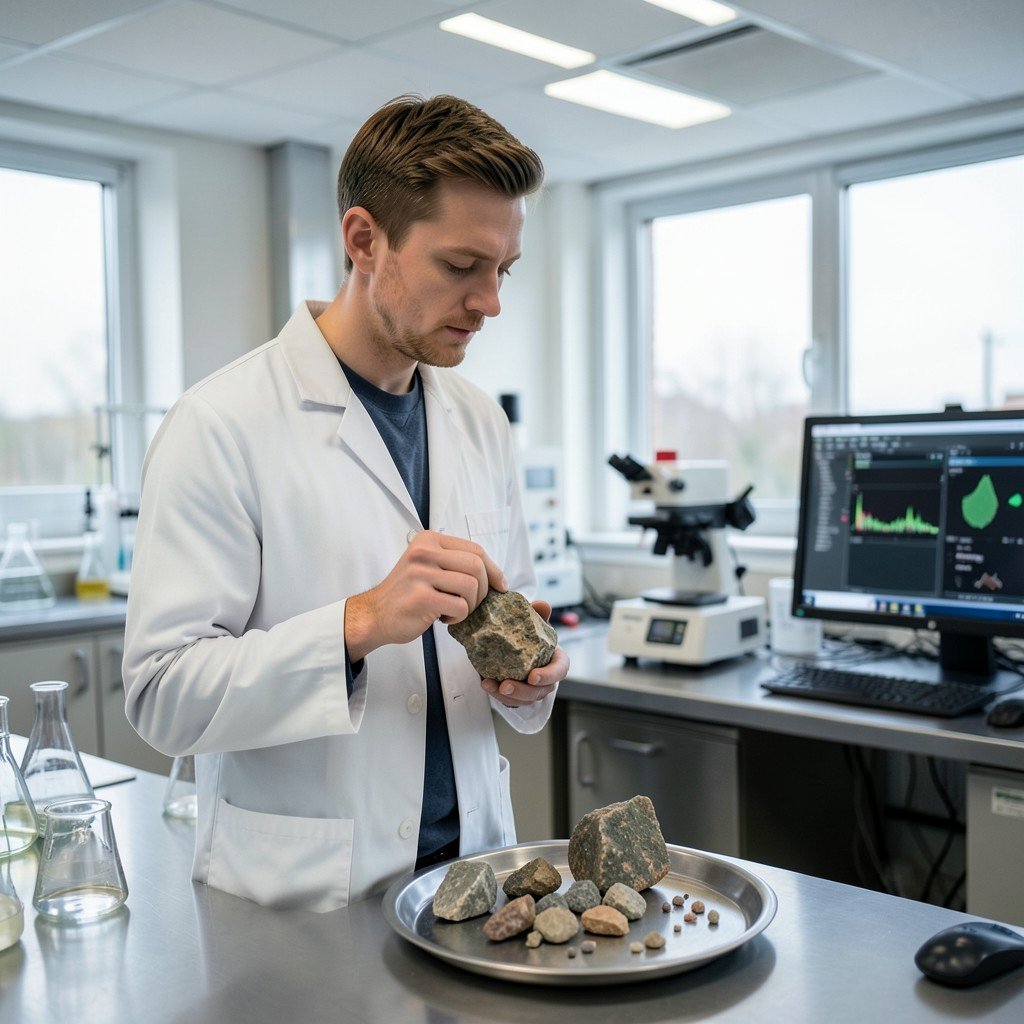
AI-generated representative image: A researcher at Uppsala University examines mineral samples as part of Sweden's rare earth mapping project to reduce dependen
Editorial Team
Editorial Team
Uppsala University-led project develops cleaner magnet production tailored to Sweden's mineral resources

Researchers at Uppsala University in Sweden have launched an interdisciplinary effort to map the country's rare earth mineral deposits and develop cleaner methods for producing magnets, aiming to reduce global dependence on China's near-total monopoly over the supply chain. Led by Professor Martin Sahlberg of Materials Chemistry, the project seeks to create a scientific foundation for domestic extraction while designing magnets whose chemical composition matches Sweden's natural mineral resources.

The initiative comes at a time when rare earth elements, essential for clean energy systems, displays and advanced magnets, have become a flashpoint in global geopolitics. China's dominance over production and its recent export halt during trade disputes have exposed vulnerabilities in supply chains that Western economies now seek to address through domestic alternatives.

Strategic Supply Chain Concerns

Martin Sahlberg described the current global situation as a geopolitical problem, pointing to recent events that have underscored the fragility of rare earth supply chains. He cited China's halt of rare earth exports amid trade war tensions and US tariffs, as well as former President Trump's interest in Greenland and the Ukraine-United States Mineral Resources Agreement as examples of growing geopolitical conflicts over critical minerals.

"Today, China basically has a world monopoly," Sahlberg said, adding that Sweden has advantages including known deposits, good access to water, relatively cheap energy and political interest in leading the green transition.
Sweden's Mineral Potential

Sweden is home to known rare earth mineral deposits in three locations: Kiruna in the north, Bergslagen in the central region, and Norra Karr near Grenna in the south. Despite their name, rare earth elements are not particularly scarce. The real challenge has always been finding deposits with concentrations high enough to make extraction economically viable.

"In Sweden our possibilities for extracting REE, even when compared internationally, are relatively good," Sahlberg said. Historically, mining operations in the country have targeted single metals such as iron, copper or gold. The new approach marks a shift toward examining the full mixture of elements present in each deposit.

Scientific Approach and Methodology

The research team is taking what Sahlberg described as an inventory-based approach, comparing the process to the television show "What's in Your Fridge." Rather than extracting a single valuable metal, researchers will analyze the complete elemental composition of each deposit and develop magnet recipes tailored to what is naturally available.

"We're creating new 'magnet recipes' based on the elements we have available," Sahlberg explained. This strategy could reduce the amount of chemical processing required and lower the environmental impact of both purification and manufacturing. Producing rare earth materials currently involves toxic chemicals and often radioactive substances. "It's rather a dirty business today," Sahlberg said.

Materials theoretical physicists, geologists and materials engineers are collaborating to identify the most sustainable route from raw mineral deposits to finished magnets.

Long-Term Research Outlook

Sahlberg described the effort as application-inspired basic research that addresses fundamental scientific questions while remaining closely tied to technologies critical for Sweden and the wider green economy. The interdisciplinary project is expected to continue for many years, with the first priority being to create a comprehensive picture of the rare earth minerals available across Sweden. "What we are doing is basic research but in an area that is technologically incredibly important," he said.

MORE LIKE THIS

Comments (0)

Leave a comment

A verified Gmail account is required to post comments.

No comments yet. Be the first to share your thoughts!