

First Atmosphere Found on Rocky Exoplanet in Habitable Zone
science and technology

First Atmosphere Found on Rocky Exoplanet in Habitable Zone

By Editorial TeamJul 21, 2026 · 3:48 PM4 min read
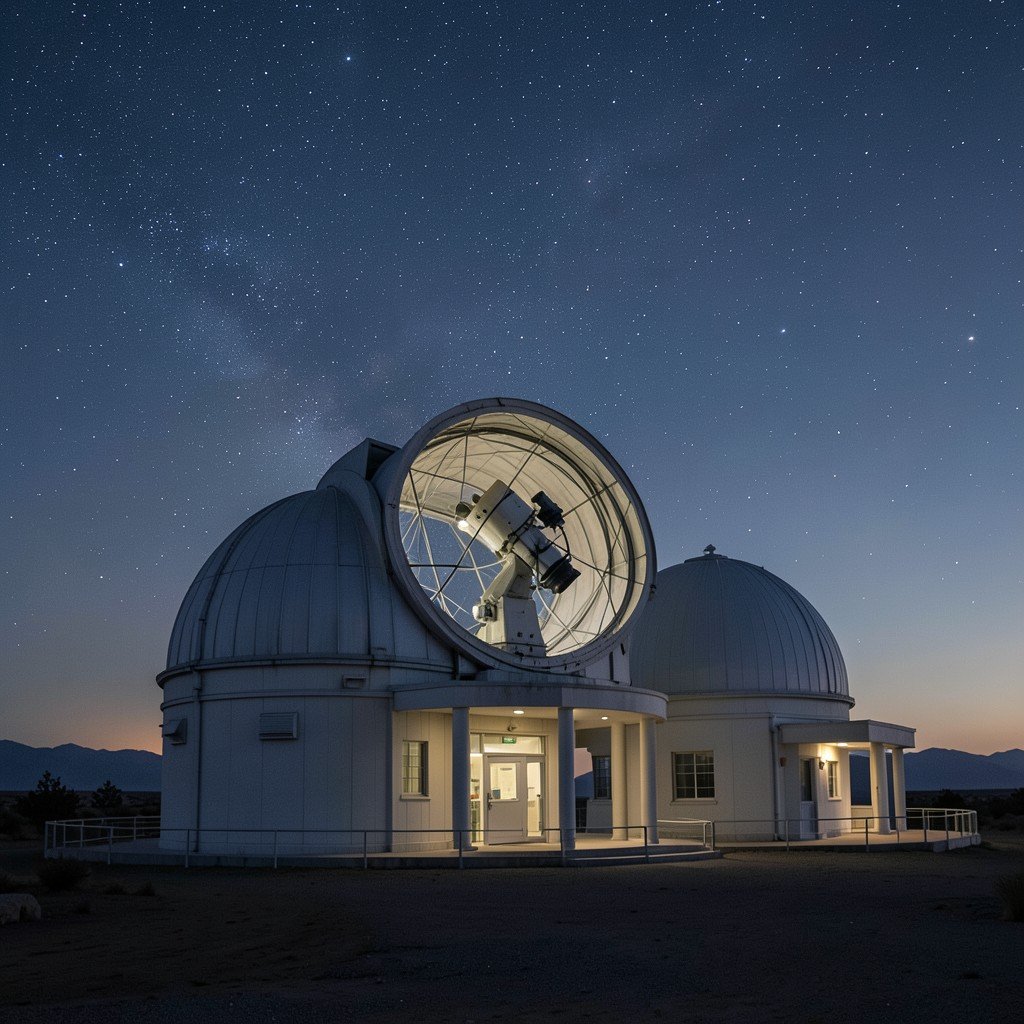
AI-generated representative image. The Magellan Observatory in Chile, where astronomers detected an atmosphere on rocky exoplanet LHS 1140 b.
Editorial Team
Editorial Team
Helium detection on LHS 1140 b, 48 light-years away, marks a historic breakthrough in exoplanet habitability research

Astronomers have detected an atmosphere on a rocky exoplanet orbiting within the habitable zone of its star for the first time, marking a major milestone in the search for worlds that could potentially support life beyond our solar system. The discovery, published July 16 in the journal Science, confirms that LHS 1140 b, a rocky planet approximately 48 light-years from Earth, retains an atmosphere that has persisted for more than three billion years.

While scientists have identified thousands of exoplanets, including several rocky worlds in habitable zones, confirming whether any of those planets actually possess atmospheres has remained one of the most formidable challenges in astronomy. An atmosphere is considered essential for a planet to support life as it is known on Earth. This finding provides the strongest evidence yet that Earth-like rocky planets with enduring atmospheres can exist elsewhere in the universe.

Historic Detection of Helium Signal

The study was led by Collin Cherubim, who recently earned his Ph.D. in Earth and Planetary Sciences from Harvard University. Cherubim and his colleagues developed a theoretical model predicting that the upper atmosphere of LHS 1140 b would contain substantial amounts of helium slowly escaping into space.

To test this prediction, the research team used the Warm Infrared Echelle (WINERED) Spectrograph at the Magellan Observatory in Chile. Their observations capitalized on a rare celestial event in which LHS 1140 b and another planet crossed in front of their host star during the same night. The second planet showed no sign of an atmosphere. LHS 1140 b, however, produced a clear helium signal, confirming that it retains an atmosphere.


Two Decades of Exoplanet Discovery

LHS 1140 b orbits a red dwarf star within its habitable zone, the region where temperatures and environmental conditions may allow liquid water to remain on a planet's surface. Previous research had identified rocky planets orbiting within habitable zones, but this study is the first to clearly demonstrate that one of those worlds has managed to keep an atmosphere for billions of years.

"Twenty years ago we wondered whether other terrestrial-type planets even existed," said Robin Wordsworth, Gordon McKay Professor of Environmental Science and Engineering and Professor of Earth and Planetary Sciences at Harvard and one of Cherubim's dissertation advisors. "Then we learned they're common, and found some in the habitable zone. The next question was whether any of them had managed to keep an atmosphere. Now we know at least one has."

Model Validation Through Observation

David Charbonneau, head of the Harvard Department of Astronomy and an astronomer at the Center for Astrophysics | Harvard & Smithsonian, served as Cherubim's joint advisor. Charbonneau said he initially doubted whether the plan would succeed, given that the prediction came from a mathematical model and this type of signal had never before been observed from a rocky world. The data changed his assessment.

"Collin analyzed the planets we knew about and predicted that this one would have a helium atmosphere," Charbonneau said. "Then he organized telescope time, got the data, and the detection was statistically rock solid." The discovery indicates that astronomers may be able to study the atmospheres of rocky exoplanets from ground-based observatories by detecting gases escaping into space.

Next Steps in the Search for Habitability

Astronomers estimate that the atmosphere of LHS 1140 b has survived for more than three billion years, making the planet an especially promising target for further study. Cherubim aims to identify the atmosphere's complete chemical composition and eventually determine whether the planet has surface oceans or other features linked to habitability. He and his colleagues also plan to apply their model to search for additional rocky worlds with atmospheres.

"This has been a model validation, and hopefully it's just the first of many more observations to come," Cherubim said.

MORE LIKE THIS

Comments (0)

Leave a comment

A verified Gmail account is required to post comments.

No comments yet. Be the first to share your thoughts!