

South Korea Records Hottest Day Ever as Global Heatwave Scorches Continents
news

South Korea Records Hottest Day Ever as Global Heatwave Scorches Continents

By Editorial TeamAug 2, 2026 · 6:29 PM3 min read
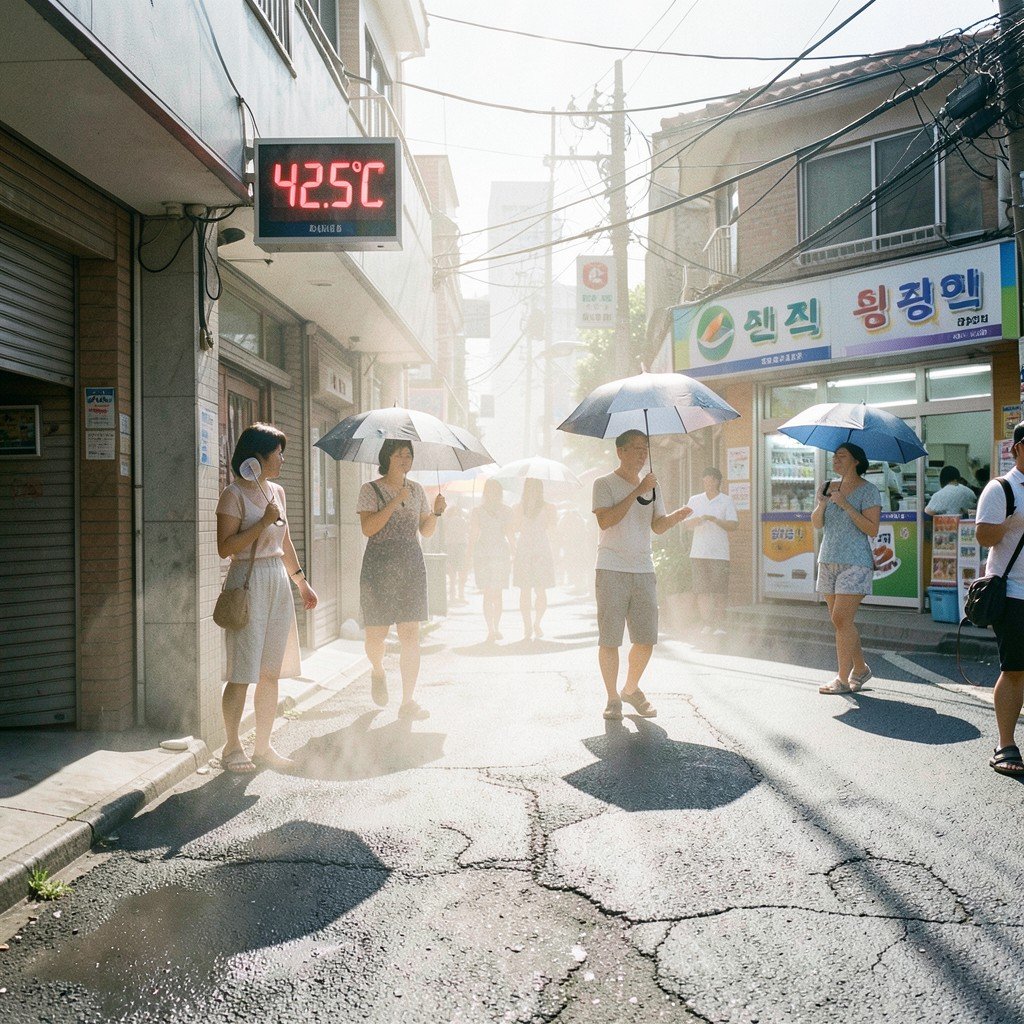
AI-generated representative image: A street thermometer in Yangsan, South Korea, displays 42.5°C as heatwave conditions grip the city amid record-breaking tempe
Editorial Team
Editorial Team
Yangsan city hits 42.5°C, shattering a century-old record as extreme heat, wildfires, and emergency alerts spread worldwide

South Korea has registered its highest temperature since national weather records began more than a century ago, with the southeastern city of Yangsan reaching 42.5 degrees Celsius (108.5F) on Sunday, according to the Korea Meteorological Administration (KMA). The milestone came on the fifth consecutive day that Yangsan exceeded 40C (104F), as an intense heatwave tightened its grip across the country.

The record underscores a broader global pattern of extreme weather that scientists attribute to human-driven climate change, which is making heatwaves more frequent, longer-lasting and more intense. From Japan's heatstroke alerts to wildfires forcing evacuations in Greece and North Africa, the weekend's events highlight how rising temperatures are straining emergency systems and threatening lives across multiple continents simultaneously.

Heatwave Alerts and Emergency Measures

Heat warnings remain in effect across much of South Korea, with temperatures climbing into the upper 30s Celsius in many cities. More than 20 localities were placed under emergency heatwave alerts on Sunday, a warning category introduced this year in direct response to increasingly severe summer conditions.

The emergency alert threshold is triggered when forecasts predict either a perceived temperature of at least 38C (100.4F) or an actual temperature of 39C (102.2F) or higher for a single day. The KMA defines a heatwave day as one in which the maximum temperature reaches at least 33C (91.4F), while a tropical night occurs when overnight temperatures do not fall below 25C (77F).

Rising Heatwave Frequency

KMA data reveals that the average annual number of heatwave days in South Korea has more than doubled over the past five years, reaching an average of 19 days, compared with just eight days in the 1970s. The sharp increase mirrors trends observed across East Asia and globally, where warming has accelerated in recent decades.

South Korea's emergency heatwave alert system was upgraded this year specifically because existing warning categories were proving insufficient for the intensity of recent summers. The change reflects a growing recognition among authorities that infrastructure and public health systems must adapt to a hotter climate.

Global Extreme Weather Snapshot

Japan is also grappling with severe heat across its eastern and western regions, with the Japan Meteorological Agency issuing heatstroke alerts for 30 of the country's 47 prefectures. Public broadcaster NHK warned residents of dangerous conditions as temperatures remained elevated.

In Europe, wildfires fueled by high temperatures and strong winds swept through parts of Greece, forcing residents to evacuate. Hot, dry conditions persisted in Spain and France, heightening the risk of further blazes. Across North Africa, extreme heat and powerful winds drove major wildfires in Tunisia, Algeria and Morocco. Tunisia deployed international firefighting aircraft as emergency crews battled fires threatening forests, farmland and nearby communities.

In the western United States, forecasters warned that temperatures could break records over the weekend, sharply increasing wildfire risks across drought-stricken and already burning areas.

What Happens Next

Heat warnings remain active across South Korea, with authorities urging residents to limit outdoor activity and stay hydrated. No immediate relief from the high temperatures has been forecast. Across the affected regions in Japan, Europe, North Africa and the United States, emergency services remain on high alert as hot and dry conditions are expected to persist in the coming days, sustaining elevated wildfire risks.

MORE LIKE THIS

Comments (0)

Leave a comment

A verified Gmail account is required to post comments.

No comments yet. Be the first to share your thoughts!