Isar Aerospace Spectrum Rocket Reaches Orbit in First European Launch
science-and-technology

Isar Aerospace Spectrum Rocket Reaches Orbit in First European Launch

By Editorial TeamSep 6, 2026 · 3:57 PM3 min read
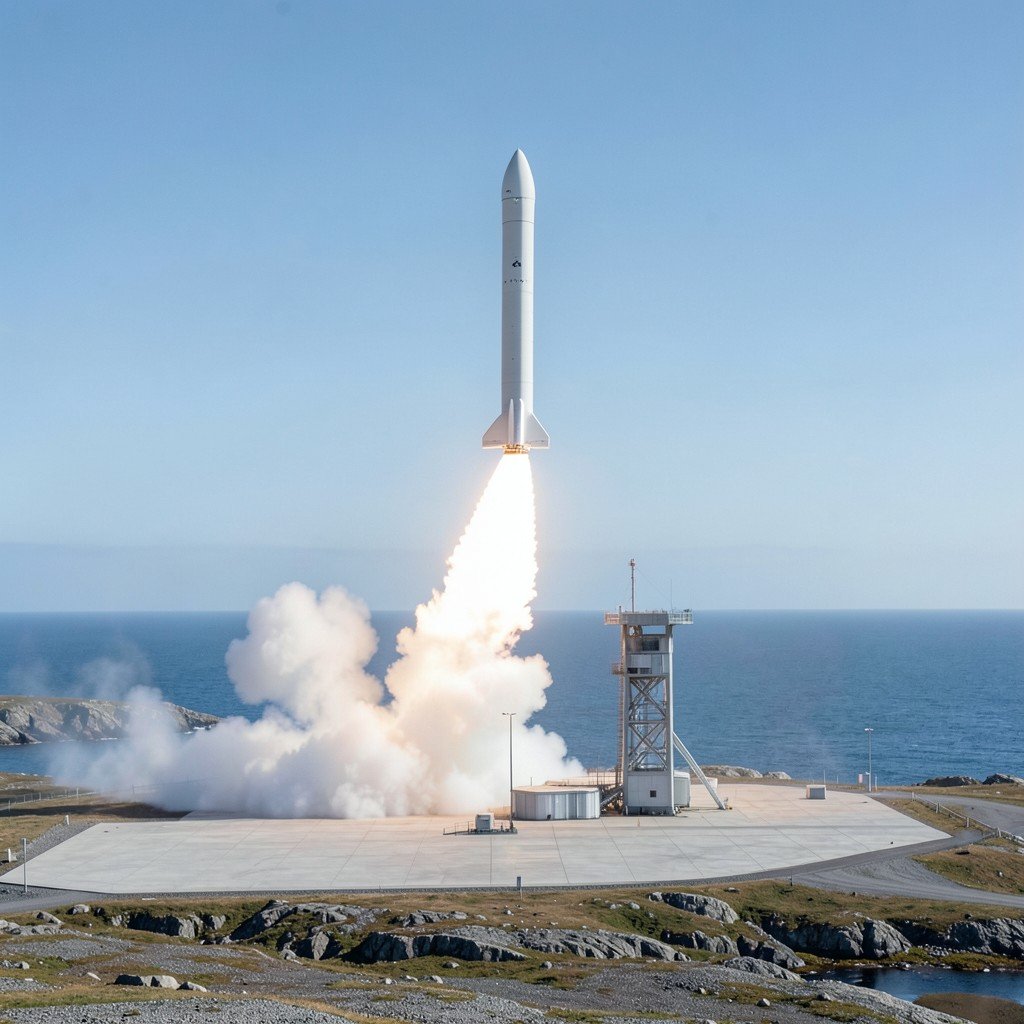
AI-generated representative image: A rocket lifts off from a Norwegian coastal spaceport, illustrating Europe's push for independent orbital launch capability.
Editorial Team
Editorial Team
German Spectrum rocket lifts off from Andoeya Spaceport in Norway carrying five satellites, a milestone for European space autonomy

A German-built rocket has reached orbit in what is being described as Europe's first commercial orbital launch, carrying five small satellites and an in-flight technology experiment from Andoeya Spaceport in Norway. The uncrewed Spectrum rocket, developed by Bavarian company Isar Aerospace, lifted off on Saturday in the firm's second attempt after an earlier launch ended in failure 18 months ago.

The successful flight marks a significant step for Europe's independent access to space, with German Chancellor Friedrich Merz calling it "the beginning of a new era."

The launch matters because Europe has been seeking to reduce its reliance on foreign launch providers, particularly as the global security landscape shifts. Isar co-founder and CEO Daniel Metzler underscored the industry's constraints, telling reporters that "launch capability is right now the biggest bottleneck in the entire industry."

The achievement strengthens Europe's position in the competitive small and medium-sized satellite launch market, where autonomy has become a strategic priority for governments and companies alike.

Key Milestones in the Launch

  • The Spectrum rocket reached orbit from Andoeya Spaceport in Norway, carrying five small satellites and a technology experiment.
  • The flight served as both the vehicle's qualification mission and its first flight carrying payload, according to the company.
  • Isar Aerospace has five more rockets in production and is targeting around 40 launches per year as a long-term goal.
  • The company is developing a second launch site in Nova Scotia, eastern Canada, which could be ready for lift-offs in 2028.

Background and Previous Attempt

The launch was Isar's second attempt after its first rocket plunged into the sea and exploded shortly after takeoff from the same site 18 months ago. No one was injured in that incident. The company has since refined its vehicle and operations to reach orbit successfully.

The Spectrum rocket is designed to serve the growing market for small and medium-sized payloads. Global competitors in the satellite launch sector include Elon Musk's SpaceX, which launches from the United States, and French ArianeGroup, a joint venture between Airbus and Safran that uses a spaceport in South America's French Guiana.

Sweden, with its Esrange launch site, and Britain, with its SaxaVord Spaceport in the Scottish Shetland Islands, are also working to expand Europe's autonomy in spaceflight. German Chancellor Friedrich Merz visited Isar's launch site in March, underscoring Europe's push for greater independence as the global order once championed by the United States shifts.


Official Reactions and Funding

Norway's minister of industry and commerce, Cecilie Myrseth, said the launch strengthens both Norwegian and European security. "The fact that we can now launch satellites from Andoeya strengthens Norwegian and European security in the turbulent times we live in," she said.

EU Defence and Space Commissioner Andrius Kubilius wrote on social media platform X that "Europe's independent access to space just got a major boost."

Isar last week said it had secured about €200 million ($232 million) from the European Space Agency to help fund development of new rockets and expand its testing and launch infrastructure. Metzler said the privately owned company remains well-funded and that an initial public offering "is not on the table."

What Lies Ahead

Isar Aerospace is now focused on expanding operations to meet rising demand, with five additional rockets already in production. The company is pursuing a long-term goal of conducting around 40 launches per year and is advancing work on its Nova Scotia site, which it said could be ready for lift-offs in 2028.

Further details on the status of the five satellites carried into orbit have not yet been officially confirmed.

MORE LIKE THIS

Comments (0)

Leave a comment

A verified Gmail account is required to post comments.

No comments yet. Be the first to share your thoughts!