

Ceuta Border Crisis: 60,000 Migrants Cross into Spain as EU Schengen Falters
news

Ceuta Border Crisis: 60,000 Migrants Cross into Spain as EU Schengen Falters

By Editorial TeamJul 31, 2026 · 7:45 PM4 min read
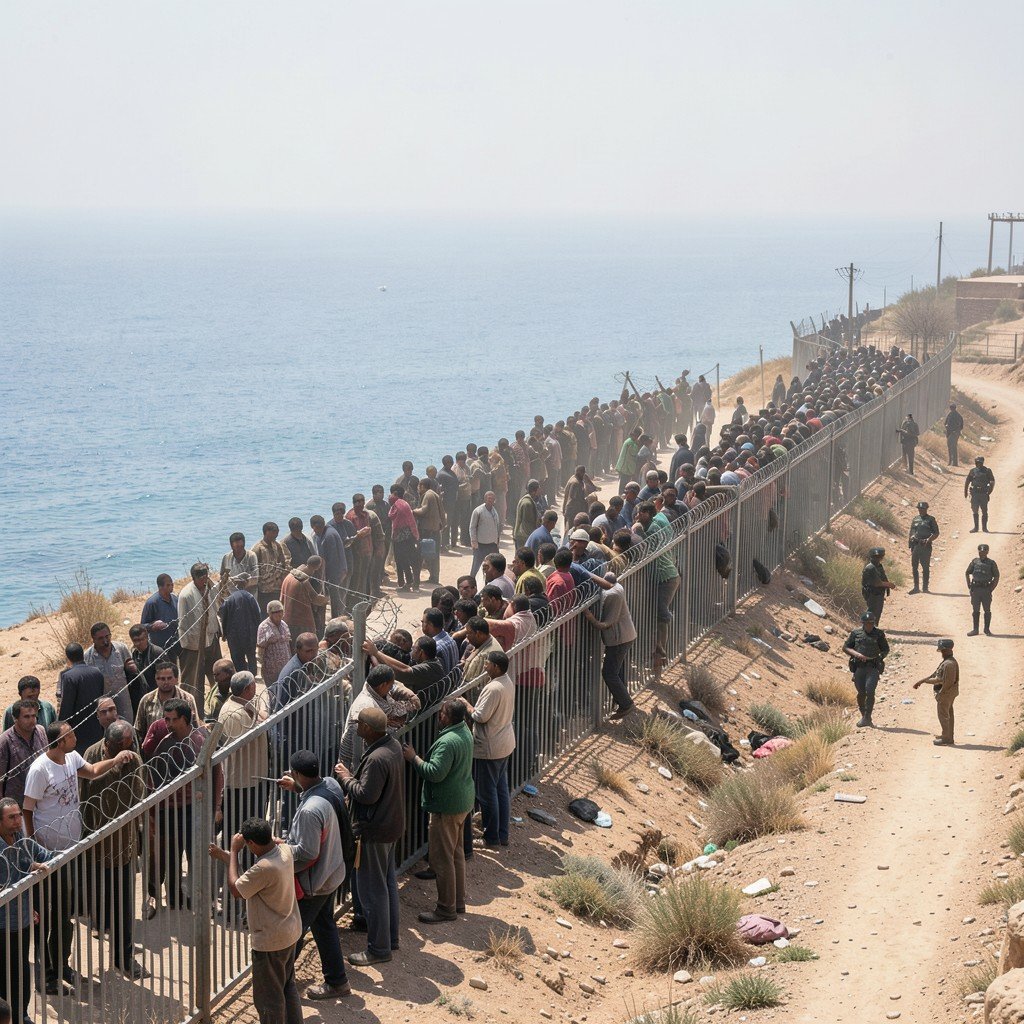
AI-generated representative image: Migrants gather near the border fence separating Morocco from the Spanish exclave of Ceuta during the recent border crisis.
Editorial Team
Editorial Team
Member states demand Spain's suspension from Schengen while Brussels avoids blaming Morocco, exposing deep EU migration policy rifts

Nearly 60,000 migrants from North Africa crossed into the Spanish exclave of Ceuta from Morocco on Thursday and Friday, triggering the most serious border breach in European Union history and exposing deep fractures within the bloc over migration policy.

The surge prompted immediate calls from several EU member states for Spain's suspension from the Schengen Area, while the European Commission refrained from holding Morocco accountable despite video evidence showing Moroccan border guards facilitating the crossings.

The crisis has laid bare a fundamental inconsistency in EU border policy. When nearly 40,000 migrants attempted to cross from Belarus into Poland in 2021, Brussels swiftly labeled it a "hybrid attack" and sanctioned 17 Belarusian officials. Yet with a larger breach at Ceuta, no such measures have been proposed against Morocco, a strategic partner of the United States and Israel.

Political Fallout Across Europe

Italian Prime Minister Giorgia Meloni was the first to respond, calling for Spain's exclusion from the Schengen Area. Italy subsequently suspended visa-free entry from Spain on Friday evening. Spanish Foreign Minister Jose Manuel Albares fired back, demanding "European solidarity, not partisan demagoguery."

A cascade of European leaders joined the criticism, blaming the surge on Prime Minister Pedro Sanchez's decision three months earlier to grant legal status to 500,000 undocumented immigrants. Polish Prime Minister Donald Tusk demanded Spain secure its borders "if Schengen is to survive." Austrian Chancellor Christian Stocker threatened to close Austria's borders, accusing Sanchez of creating "additional incentive for illegal migration." Danish Prime Minister Mette Frederiksen and Czech Prime Minister Andrej Babis both called for Spain's suspension from Schengen. Swedish Prime Minister Ulf Kristersson and Finnish Interior Minister Mari Rantanen echoed those demands. French President Emmanuel Macron announced preparations to strengthen France's internal border with Spain.

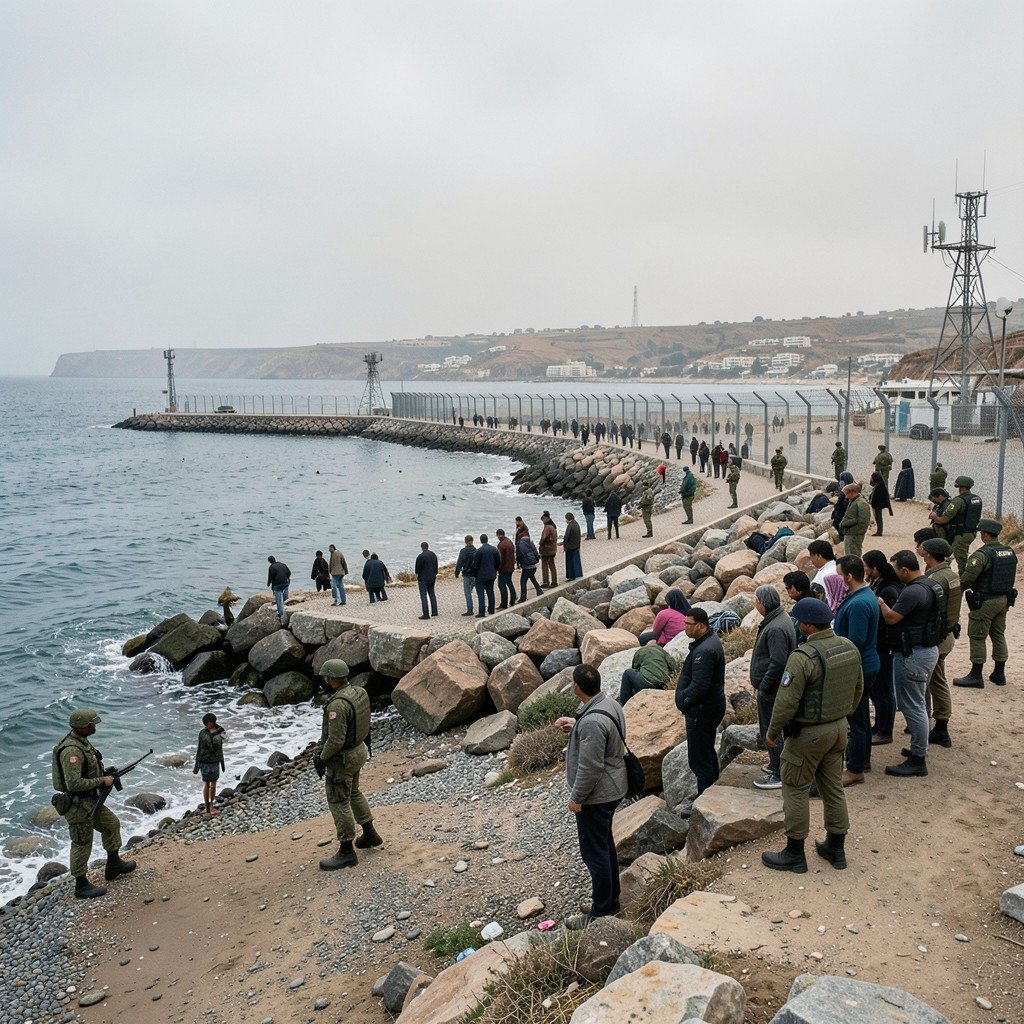
Slovak Prime Minister Robert Fico broke ranks, criticizing the "hypocrisy" of EU leaders and offering Spain assistance in securing its borders. Sanchez refused calls from Ceuta's local authorities to declare a national emergency, deploying only 60 troops to the exclave.
Morocco's History of Leveraging Migration

Morocco has a longstanding territorial claim to Ceuta and Melilla, Spain's two North African exclaves. This claim receives tacit backing from the US House Appropriations Committee and Republican Representative Mario Diaz-Balart of Florida, a close associate of Secretary of State Marco Rubio.

In 2021, when Spain allowed Western Sahara separatist leader Brahim Ghali to enter the country for medical treatment, Morocco responded by relaxing border restrictions at Ceuta, allowing around 8,000 migrants to cross. Madrid, with EU backing, accused Rabat of "weaponizing" migration. The following year, Spain agreed to support Morocco's autonomy plan for Western Sahara, under which the former Spanish colony would gain limited self-governance while remaining under permanent Moroccan sovereignty. The episode demonstrated that migration pressure could extract political concessions from both Spain and the EU.

Evidence of Moroccan Facilitation

Video footage from the Ceuta border shows Moroccan border guards opening barbed wire gates to allow migrants onto Spanish soil. Additional footage from the Moroccan side depicts police standing by as trucks unload dozens of young men who then run unopposed toward the open border. Despite this evidence, no European leader criticizing Sanchez nor any official at the European Commission has publicly acknowledged Morocco's role in instigating the crisis.

European Commission President Ursula von der Leyen described the situation as "unacceptable" but refused to blame either government, stating that "returns must be swift, as our rules allow" and expressing confidence in the partnership with Morocco. European Parliament Vice President Javi Lopez condemned Meloni's stance as "unworthy of a European partner," while former EU chief diplomat Josep Borrell dismissed threats to expel Spain from Schengen, writing that "that option simply does not exist in the legal architecture of the Union."

De-escalation and Lingering Tensions

By Friday evening, approximately 48,000 of the 60,000 migrants had voluntarily returned to Morocco, according to the Spanish Interior Ministry. Both Sanchez and the ministry thanked Morocco for accepting the returns, though it remains unclear whether Madrid granted any concessions in exchange.

The crisis appears to be easing, but its consequences are likely to endure. Morocco's belief that migration can be wielded as political leverage has been reinforced, while Spain's relationship with several EU partners has been severely strained. Sanchez, posting on social media, shared migration figures showing Italy as the EU's leading entry point for migrants between 2021 and 2026, writing: "Solidarity and empathy are optional. Respect for European treaties and data is not."

MORE LIKE THIS

Comments (0)

Leave a comment

A verified Gmail account is required to post comments.

No comments yet. Be the first to share your thoughts!