
Taiz Water Crisis Deepens as Houthi Siege Tightens in Yemen
news

Taiz Water Crisis Deepens as Houthi Siege Tightens in Yemen

By Editorial Team•Nov 19, 2026 · 7:27 PM•4 min read
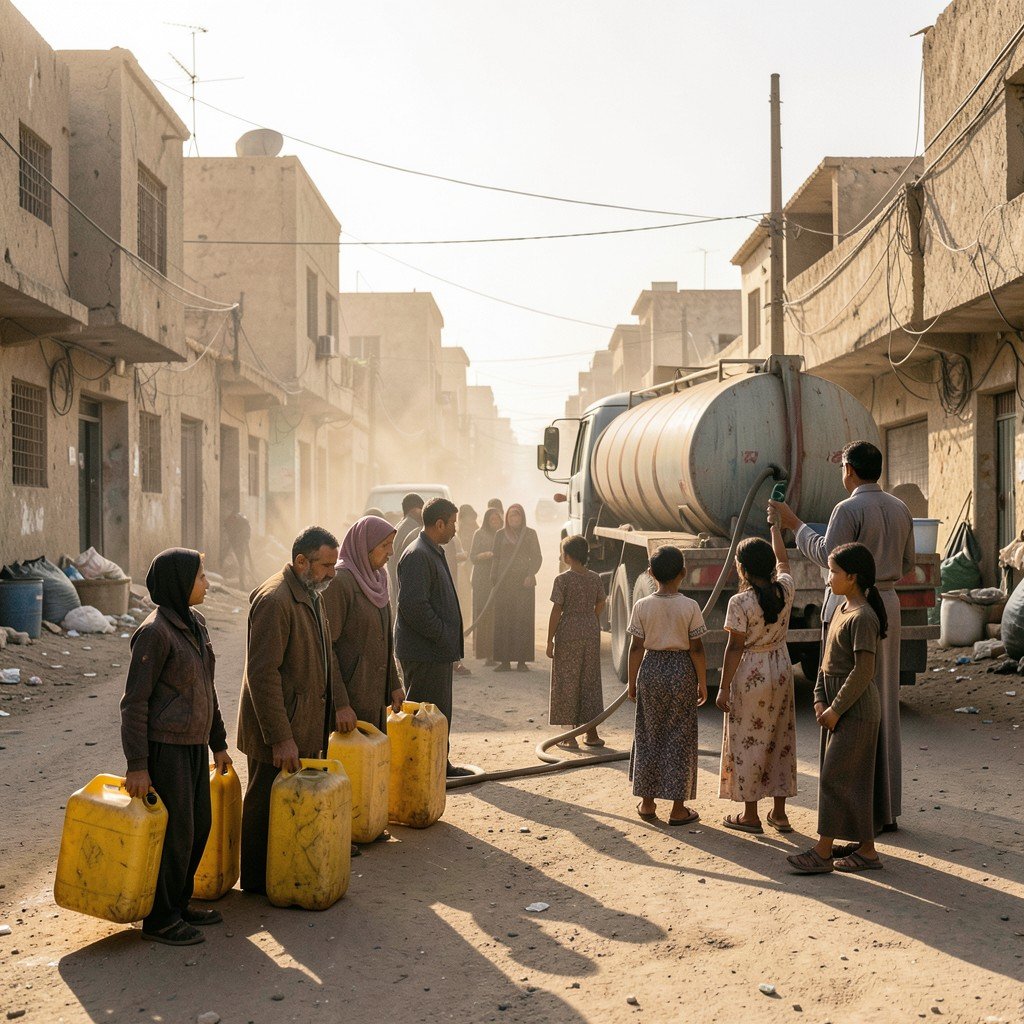
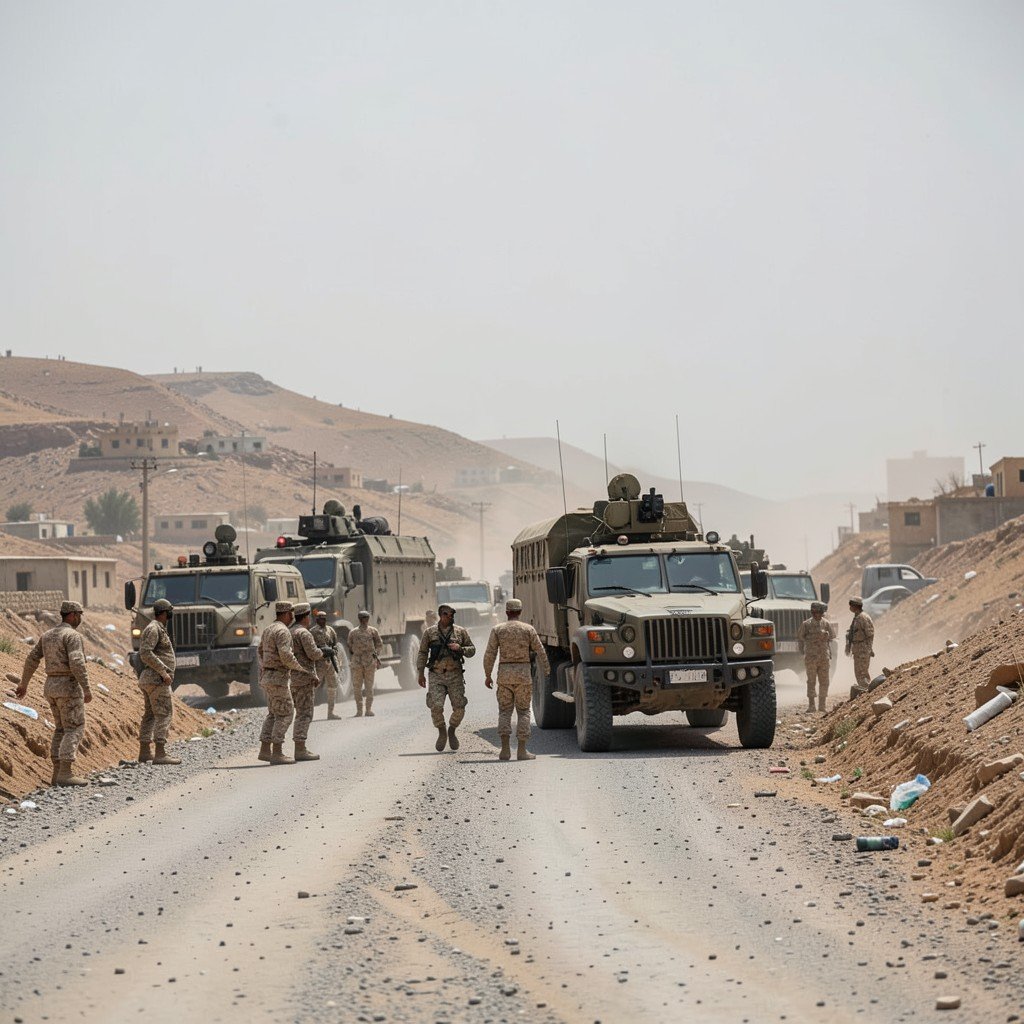
AI-generated representative image: residents collect water from a tanker amid a severe water shortage in the besieged Yemeni city of Taiz.
Editorial Team
Editorial Team
UNICEF warns production nearly halved and 800,000 cut off from aid amid renewed Houthi encirclement

The besieged Yemeni city of Taiz is confronting a severe water crisis after a renewed Houthi encirclement in October sharply reduced daily production and cut more than 800,000 people off from humanitarian assistance, according to UNICEF.

Residents report paying twice the price for water tankers, while hospital administrators warn of an impending public health disaster as the city struggles to meet even a fraction of its daily water needs.

The crisis marks the latest escalation in a conflict that has gripped Yemen since 2014, with Taiz, the country's third-largest city, now facing a convergence of water shortages, fuel scarcity, and collapsing public services. The situation has left government officials uncertain how much longer they can fund even limited operations.

For residents, the consequences extend beyond inconvenience to immediate health risks, as contaminated water and uncollected waste fuel the spread of diseases such as cholera and acute diarrhoea.

Siege Deepens Water Shortages

The renewed Houthi siege, which began in October after the group advanced against government forces in the countryside around Taiz, has triggered a cascade of disruptions. The Iranian-backed group seized Hadhran al-Dhabab, an external wellfield that had been partially restored in August 2025.

The seizure caused the local water corporation to lose 3,200 cubic metres (112,000 cubic feet) of daily production capacity. Of that total, 1,200 cubic metres (42,000 cubic feet) was lost when pumping stopped at Hadhran al-Dhabab, while a further 2,000 cubic metres (70,000 cubic feet) was lost after wells inside the city stopped operating due to a diesel shortage. The corporation can now produce only 1,800 cubic metres (63,180 cubic feet) per day from the emergency wells it can still operate.

Funding and supplies for the city's charitable water distribution points, known as "sabeel," have also been disrupted. These subsidised points previously provided up to 1.5 million litres (396,000 gallons) of fresh water daily, alongside a further 1 million litres (264,000 gallons) of untreated water.
Years of Water Scarcity

Taiz has long suffered from severe water shortages, but the situation intensified in 2015 with the first Houthi siege of the city and has worsened each year since, according to Wafiq al-Aghbari, director-general of Taiz governorate's Local Water and Sanitation Corporation.

Before the war began in 2014, Taiz received about 20,000 cubic metres (700,000 cubic feet) of water per day from six large wellfields. Only one of those wellfields lies inside city limits, and it had previously been used only in emergencies. By 2015, Taiz had lost access to all five external wellfields, which had either fallen under Houthi control or sat on the front lines, leaving the city reliant on its emergency wells.

Recent efforts to dig additional wells and rehabilitate existing sources had raised daily production capacity to 5,000 cubic metres (175,000 cubic feet), still just 14 percent of the city's estimated daily needs, before the latest siege reversed those gains.

Public Health and Economic Fallout

Dr Abdulqawi al-Shamiri, director of Taiz's al-Taawun Hospital, warned of "serious health disasters" resulting from the interruption of safe water supplies. He said water from emergency wells within the city had "long been unfit for human use," with much of it contaminated or classified as hard water containing high concentrations of salts.

The contamination stems from sewage mixing with water due to poorly maintained networks and rubbish dumped in streets and floodwater channels. Al-Shamiri said the Houthis have prevented waste from being transported to a landfill outside the city, and an internal report from the governorate's Cleaning and Improvement Fund found that close to half of the city's rubbish is going uncollected.

Commercially supplied water has also become more expensive. One tanker owner, speaking anonymously for security reasons, said prices rose from 18,000 riyals (about $12 at parallel market rates) to 30,000 riyals (about $20) per tanker at the siege's outset. He described lengthy Houthi inspection procedures and occasional entry denials lasting more than a day due to heightened military tensions.

What Lies Ahead

The water corporation has entered a major financial crisis after losing most international and local funding, even as demand for free distribution points grows because more residents can no longer afford commercially supplied water. The Houthis have denied responsibility for the closure of roads into Taiz, though Human Rights Watch has said residents, aid workers, and UN officials blame the armed group for the shortages.

With production capacity now far below daily needs and no confirmed timeline for restoring access to external wellfields, additional information on humanitarian relief efforts remains awaited.

MORE LIKE THIS

Comments (0)

Leave a comment

A verified Gmail account is required to post comments.

No comments yet. Be the first to share your thoughts!