
Gaza Premature Babies Fight for Survival in Neonatal Crisis
news

Gaza Premature Babies Fight for Survival in Neonatal Crisis

By Editorial TeamJul 25, 2026 · 10:55 AM4 min read
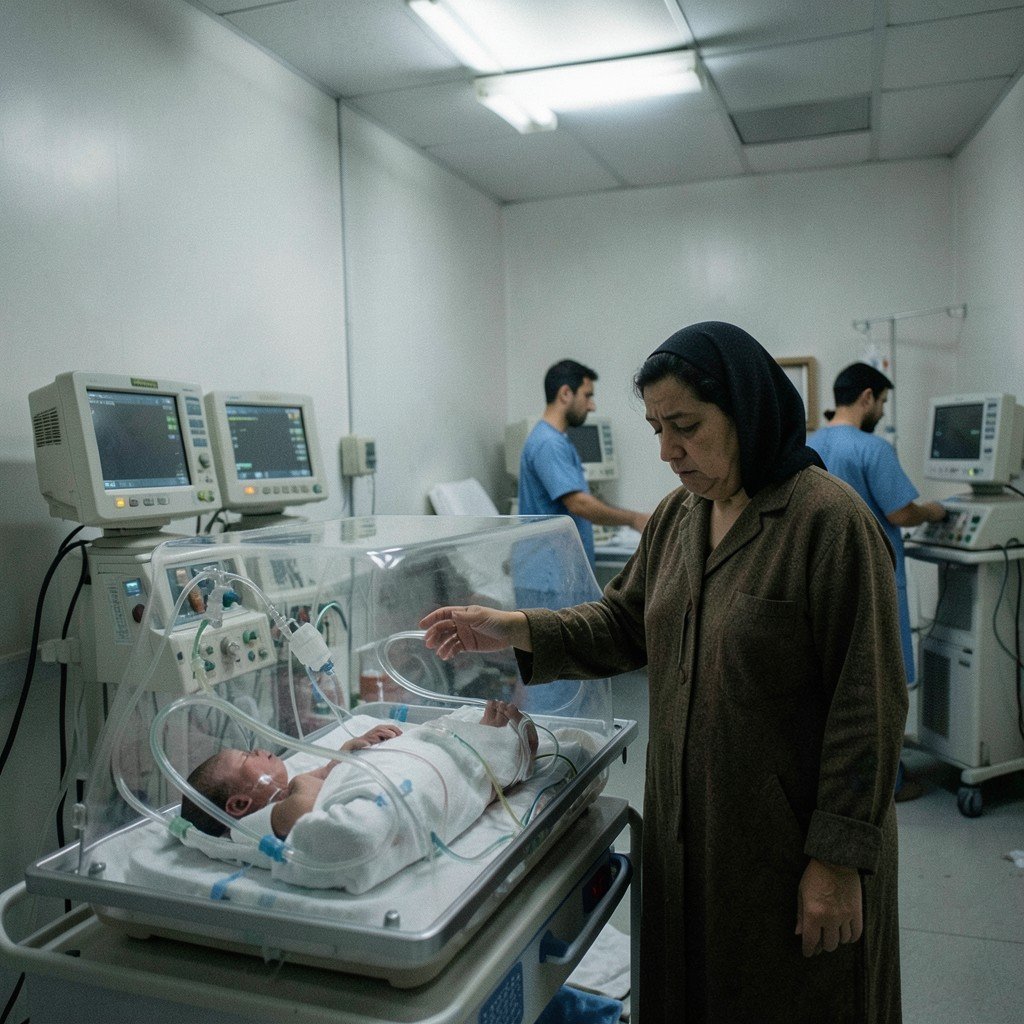
AI-generated representative image. A mother watches over her premature baby in an incubator at a Gaza hospital NICU amid critical shortages.
Editorial Team
Editorial Team
Sharp rise in preterm births and incubator shortages overwhelm Gaza's only neonatal unit amid ongoing conflict

Noor Salem, 30, spends her days beside an incubator at Al-Aqsa Martyrs Hospital in Deir el-Balah, central Gaza, watching her newborn son Yazan Al-Khalidi fight for breath through tubes and monitors. Born at eight months with breathing difficulties, Yazan was rushed to the neonatal intensive care unit (NICU) instead of being placed in his mother's arms. He is Noor's second child; she lost her first baby shortly after birth during the famine in Gaza in 2025.

Yazan's story is not an isolated case. Since October 7, 2023, Gaza has witnessed a sharp increase in premature births, underweight newborns, stillbirths and birth defects. UNICEF warns that one in every five newborns in Gaza now requires intensive neonatal or thermal care, placing overwhelming strain on an already devastated health system.

Rising Crisis in Premature Births

Maternal malnutrition, prolonged psychological stress and declining prenatal care services are driving the surge in preterm births across Gaza. Dr Afnan Abu Hasaballah, an obstetrician and gynecologist working with UNRWA and Al-Awda Health Hospital in Nuseirat refugee camp, said many pregnant women arrive at hospitals suffering from severe stress and exhaustion after repeated displacement, deprivation of essential goods and exposure to bombings.

"Constant fear, repeated displacement, lack of food and clean water, and limited access to prenatal care all increased the risk of premature birth," she said.

The Israeli siege has led to severe malnutrition, increasing the risk of anemia, exhaustion, pregnancy complications and restricted fetal growth. "Many pregnant women during the war were unable to access sufficient or balanced food, and this directly affected the health of mothers and newborns," Dr Abu Hasaballah added.

Overwhelmed Health Services

Al-Aqsa Martyrs Hospital is the only medical facility with a neonatal unit in all of central Gaza, serving thousands of expectant mothers with severely limited resources. Health workers face chronic shortages of incubators, ventilators, medications and basic supplies, compounded by repeated power and fuel cuts that threaten the lives of babies dependent on life-support equipment.

"We were working under enormous pressure, with shortages of incubators, ventilators, medications and basic supplies, in addition to repeated power and fuel shortages, which posed a direct threat to babies inside the incubators," Dr Abu Hasaballah said.

Premature babies require continuous monitoring, oxygen, respiratory support, proper nutrition and treatment. When these resources are unavailable, the risk of serious complications including breathing difficulties, low body temperature, infections and low blood sugar rises sharply. "Unfortunately, we may lose babies who could have survived if they had received basic care," she said.

Emotional and Post-Discharge Struggles

The abrupt separation of mothers from their newborns is one of the hardest experiences, causing immense anxiety. The most common question doctors hear is whether the child will survive. "Instead of holding their baby and celebrating, mothers see them transferred directly to the incubator or intensive care unit," Dr Abu Hasaballah said. "Their fear is doubled because the war has affected everything, from medical equipment and supplies to electricity shortages and overcrowding in hospitals."

Once discharged, families face new hardships. Essential baby care items such as sterilisation kits, baby formula, diapers, blankets and clean water are either absent or unaffordable. "Many families have lost everything because of displacement, leaving mothers without baby clothes, diapers, blankets, formula or clean water," Dr Abu Hasaballah said.

Limited Relief Efforts

In Nuseirat refugee camp, the Qutoof Al-Khair Foundation provides vitamins, nutritional supplements, medicines and essential medical supplies to pregnant women and newborns. Akram Abu Jiab, the foundation's head, said demand for services is growing rapidly while resources remain severely constrained. "The scale of needs far exceeds the available resources. The gap between needs and support continues to grow every day," he said. "Supporting mothers and children at this stage is not a luxury; it is a necessity to protect the lives of the next generation."

MORE LIKE THIS

Comments (0)

Leave a comment

A verified Gmail account is required to post comments.

No comments yet. Be the first to share your thoughts!