

Plastic waste chokes Yemen's agricultural valleys amid war
features

Plastic waste chokes Yemen's agricultural valleys amid war

By Editorial TeamJul 24, 2026 · 6:17 PM4 min read
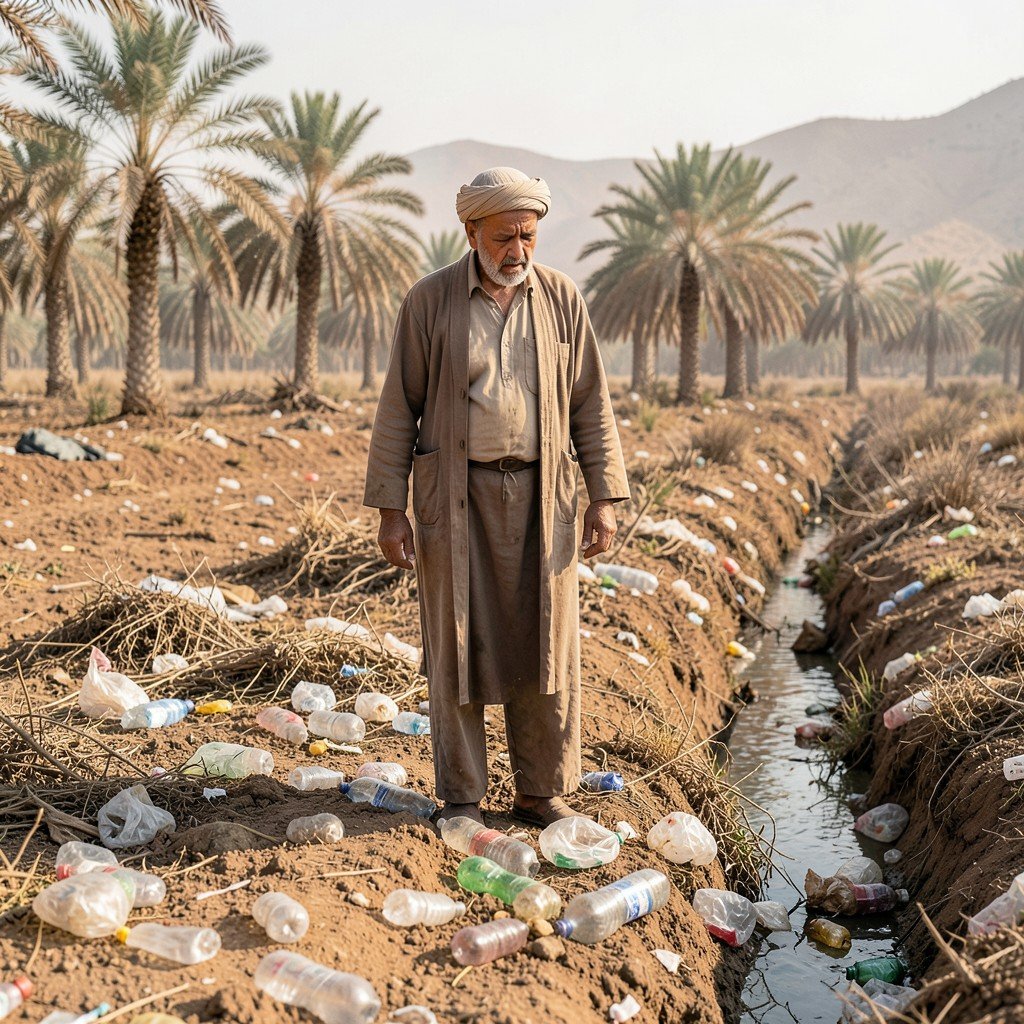
AI-generated representative image. Plastic waste and debris litter agricultural land in Wadi Dawan, Hadramout, Yemen, as war has crippled waste collection servi
Editorial Team
Editorial Team
Farmers in Wadi Dawan struggle to clear irrigation channels of plastic debris as experts warn of damage to soil and public health

In Wadi Dawan, one of Yemen's most celebrated agricultural valleys in the eastern Hadramout province, plastic waste has overwhelmed flood channels, roadsides and palm groves, threatening the region's famed date and honey production. Farmers report that rubbish carried by seasonal floods blocks irrigation canals, depriving fields of water and forcing them to manually clear debris before planting. The crisis, driven by years of war, collapsed public services and the absence of a functioning waste collection system, has drawn warnings from environmental experts about irreversible damage to soil, water sources and public health.

For the thousands of residents living across Wadi Dawan's scattered villages, the accumulation of plastic bags, bottles, food wrappers and even dead animals in irrigation channels is not merely an eyesore. It is a direct threat to their livelihoods and health. With local authorities starved of funding after more than a decade of conflict, the valley's agricultural economy and the safety of its water supply are now at serious risk.

Plastic Waste Crisis Across Farming Communities

Yousef Abdullah, a 65-year-old farmer and orchard owner in Wadi Dawan, described the situation as a disaster in the making. He said floodwaters carrying plastic waste block irrigation channels, forcing farmers to rush to clear the rubbish before the water recedes. "We move from one irrigation channel to another leading to our farms, removing plastic bags, construction debris, and trees," he said. "We have to do it carefully because broken glass hidden in the rubbish can easily cut us." After the floods recede, farmers must collect plastic bottles and bags from their fields before they can sow seeds.

Salem Raji, who heads the Ministry of Agriculture's office in Wadi Dawan and is also an agricultural researcher, launched a local awareness initiative to address the problem. He has met with officials, spoken to local media and used social media to warn residents. However, he acknowledged that his efforts have had little impact. Raji said his office's monthly budget stands at just 8,000 Yemeni riyals, or approximately $5, leaving staff unable to conduct field visits or remove waste from farms and flood channels.


War and Institutional Collapse

The waste crisis has worsened significantly over the past decade as Yemen has been engulfed in a conflict between Iran-backed Houthi forces and the Saudi-backed, internationally recognised government. The war has killed hundreds of thousands of people, displaced millions and devastated state institutions. Local municipalities and agricultural offices have been left with little funding or capacity to provide even basic services such as waste collection. Large parts of Wadi Dawan have no waste collection points at all. Where green bins exist, they are often overflowing. Garbage trucks are supposed to collect waste weekly, but the service is frequently disrupted due to lack of funding and poor vehicle maintenance.

Expert Warnings on Health and Agriculture

Dr Yassin Abdul Malik al-Shuraihi, who heads disease surveillance in Taiz governorate, said the province suffers from a severe shortage of rubbish bins and chronic delays in waste collection. Residents have resorted to dumping sewage, household waste and construction debris into flood channels running through agricultural areas. "We record a large number of diarrhoea cases throughout the year because sewage contaminates some drinking wells, making the water unsafe," he said.

Khaled Saleh Bawahidi, a professor and director of the Environmental Studies and Water Resources Centre at Hadramout University, warned that accumulated waste is degrading natural habitats and polluting the soil around palm trees. "Bee health is also at risk as grazing areas deteriorate and the quality of natural resources declines. This could lead to a drop in the quality of dates and honey," he said. Bawahidi added that waste dumped in valleys creates breeding grounds for insects and rodents that can transmit diseases to humans and livestock.

Urgent Calls for Action

Environmental experts and local officials are calling for urgent intervention to address the growing waste crisis across Yemen's rural areas. Raji has appealed for an increase in his office's budget to enable regular field visits and public education campaigns. Without additional funding and a functioning waste collection system, residents and experts warn that the contamination of soil and water will continue to worsen, jeopardising agricultural productivity and public health across the country.

MORE LIKE THIS

Comments (0)

Leave a comment

A verified Gmail account is required to post comments.

No comments yet. Be the first to share your thoughts!